Elevated stress levels have become a daily reality for tens of millions of people. Between work responsibilities, family obligations, financial concerns, social media pressures and constant notifications, an increasing number of people never truly unwind.
While exercise is a great way to relieve stress & promote mental health the reality for most people is the commute, weather, time constraints, costs, and various health issues make daily exercise challenging for most people
One increasingly popular solution for stress relief is art therapy. While formal art therapy is often guided by a licensed professional, many creative activities offer similar stress-relieving benefits by helping people focus on the present moment, express emotions, and take a break from everyday pressures.
In fact, a survey of 1,000 full-time workers from Paint Me Like found that 80% said creative hobbies have improved their mental health, highlighting the powerful connection between creativity and emotional well-being. The same study found that workers were far more likely to view creative hobbies as effective stress relievers than scrolling social media.
If you’re looking for a relaxing creative outlet, here are eight art therapy-inspired activities that can help reduce stress and improve your mood.
1. Paint by Numbers
Paint by numbers is one of the easiest and most effective forms of stress art therapy because it removes the pressure of creating something from scratch.
All you need to do is match numbered paint colors to corresponding sections on the canvas. The repetitive, focused process encourages mindfulness and helps quiet racing thoughts and negative feedback loops.
Many people find painting ocean scenes especially calming because beaches, waves, and coastal landscapes naturally promote feelings of relaxation. That’s why beach-themed paint by numbers kits are an excellent choice for stress relief.
For anyone dealing with stress, painting relaxing visuals like oceans & seascapes offer a variety of peaceful coastal scenes that can help transform a stressful evening into a relaxing creative experience.
Benefits:
- Encourages mindfulness
- Reduces screen time
- Creates a sense of accomplishment
- Suitable for all skill levels
2. Coloring Books for Adults
Adult coloring books have become one of the most popular stress-relief activities because they’re accessible, affordable, and easy to start. Unlike drawing or painting, coloring removes the pressure of creating something from scratch. Instead, you can focus entirely on selecting colors and filling in intricate designs.
The repetitive motion of coloring can feel almost meditative, helping to quiet racing thoughts and keep your attention on the present moment. Many people find that spending just 20 to 30 minutes coloring after a stressful day helps them relax, unwind, and temporarily disconnect from screens and daily responsibilities.
Popular coloring book themes include mandalas, floral patterns, animals, nature scenes, and abstract designs. Because there are no rules or expectations, adult coloring offers a simple way to enjoy creativity while promoting a sense of calm and focus.
Benefits:
- Easy for beginners
- Encourages mindfulness
- Reduces screen time
- Helps improve focus and concentration
3. Watercolor Painting
Watercolor painting is a perfect mental relaxation activity that encourages creativity without requiring perfection. Unlike more structured art forms, watercolor often produces beautiful and unexpected results as colors blend and flow naturally across the paper.
There is nothing more calming that mixing colors, applying gentle brushstrokes, and watching pigments spread across the page can help shift attention away from stressful thoughts and toward the creative moment in front of you. Because watercolor is known for its soft, flowing appearance, it often feels less intimidating than traditional acrylic or oil painting.
Beginners frequently start with simple subjects such as sunsets, mountains, flowers, oceans, and landscapes. The goal isn’t creating a masterpiece, it’s enjoying the experience of painting and giving your mind an opportunity to slow down.
Benefits:
- Encourages creative expression
- Promotes relaxation and mindfulness
- No artistic experience required
- Helps reduce stress through focused attention
4. Clay Sculpting
Clay sculpting is a hands-on creative activity that engages both the mind and body, making it a great for anyone looking to unwind with a creative hobby. The physical act of kneading, rolling, shaping, and molding clay provides a sensory experience that many people find grounding and calming. Because your hands are constantly engaged, it’s easier to focus on the task in front of you rather than dwelling on stressful thoughts or daily worries.
One of the biggest advantages of clay sculpting is that there are no strict rules. Clay sculpting also provides a big advantage in that you can create functional pieces like bowls and mugs, decorative sculptures, ornaments, or completely abstract designs. Many people report that working with clay helps them slow down, feel more present, and temporarily disconnect from the pressures of everyday life.
Benefits:
- Sensory engagement
- Improved focus and concentration
- Reduced mental clutter
- Encourages creative self-expression
5. Art Journaling
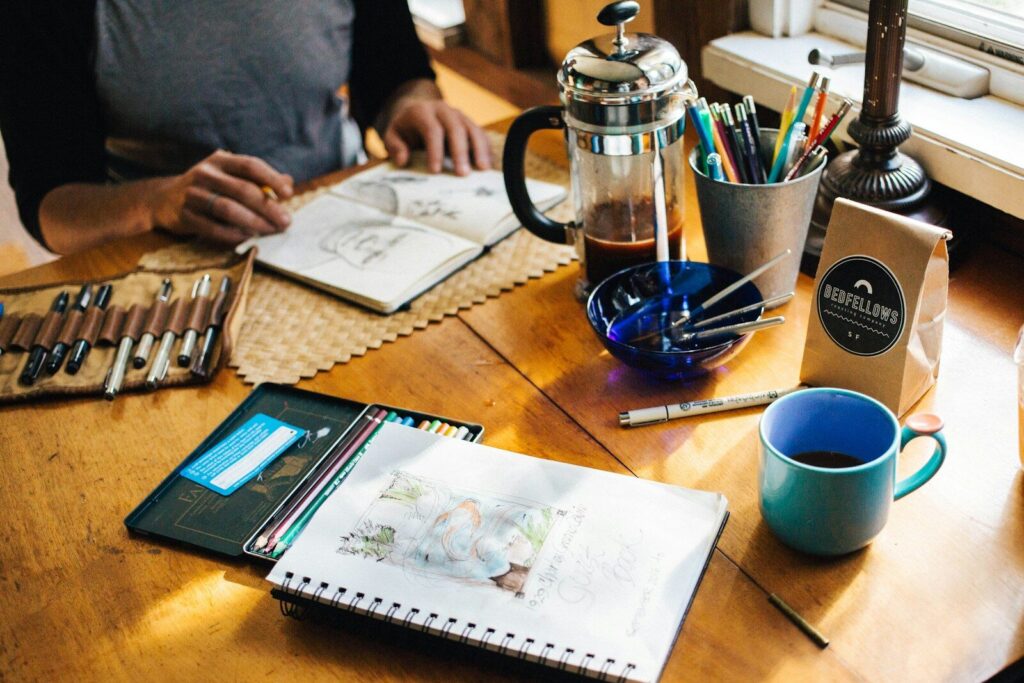
Art journaling combines drawing, painting, writing, collage, and other creative techniques into a highly personal form of self-expression. Unlike traditional journaling, which focuses primarily on written entries, art journaling allows you to communicate thoughts and emotions visually. This can be especially helpful during stressful periods when it feels difficult to put your feelings into words.
There are no rules when it comes to creating an art journal. Some people fill pages with sketches and watercolor paintings, while others combine photographs, magazine cutouts, handwritten reflections, quotes, stickers, and mixed media elements. The freedom to create without judgment makes art journaling an effective stress-relief activity that encourages mindfulness and emotional processing.
Over time, an art journal can become both a creative outlet and a personal record of your experiences, helping you recognize patterns, reflect on challenges, and celebrate moments of growth. The focus isn’t on artistic skill—it’s simply about creating a safe space to explore your thoughts and emotions through creativity.
Benefits:
- Supports emotional expression
- Encourages mindfulness and reflection
- Combines multiple creative mediums
- Creates a personal record of growth and experiences
6. Collage Making
Making collages is an abstract, approachable art form that doesn’t require drawing or painting skills.
Using magazines, photographs, printed images, and decorative paper, you can create visual representations of your goals, emotions, memories, or inspirations.
The process of selecting, arranging, and assembling images can be both relaxing and highly personal. This activity is great because you can often do it with junk lying around your house, which all helps to remove clutter
7. Nature Sketching
Spending time in nature has long been associated with lower stress levels, improved mood, and better mental well-being. When you combine time outdoors with sketching, the benefits can be transformative. Nature sketching encourages you to slow down, observe your surroundings, and focus on small details that might otherwise go unnoticed during a busy day.
Unlike traditional drawing classes, nature sketching isn’t about creating perfect artwork. The goal is simply to spend time observing and capturing what you see. Whether you’re sitting in a local park, hiking a trail, relaxing in your backyard, or visiting a botanical garden, sketching can help shift your attention away from daily worries and into the present moment.
If you’re just starting out drawing simple subjects such as trees, flowers, birds, leaves, or landscapes. Even quick sketches can improve mindfulness by encouraging careful observation and focused attention. Over time, many people find that nature sketching becomes both a relaxing creative hobby and a reason to spend more time outdoors.
Benefits:
- Combines creativity with time in nature
- Encourages mindfulness and observation
- Reduces stress and mental fatigue
- Suitable for all artistic skill levels
8. Diamond Painting
Diamond painting combines elements of painting, puzzles, and crafts into a highly repetitive and relaxing activity.
Small resin gems are placed onto an adhesive canvas to gradually reveal a colorful image. Many people describe the process as calming because it provides a clear objective while requiring gentle concentration.
Like paint by numbers, diamond painting is beginner-friendly and offers a satisfying sense of progress with every completed section.
Why Art Therapy Works For People With High Levels of Stress
Creative activities help redirect attention away from worries and toward the present moment. Research consistently shows that engaging in creative pursuits can reduce stress and support emotional well-being. Even short periods of art-making have been associated with lower stress levels and improved mood.
The best part is that you don’t need artistic talent to benefit. The goal isn’t creating a perfect piece of art, it’s about enjoying the process.