
Native American-inspired interiors are most successful when they begin with respect rather than imitation. The cultures, artistic traditions, materials, and visual languages associated with Native American communities are extraordinarily diverse, and treating them as a single decorative style can flatten that complexity. A thoughtful home should therefore draw inspiration from broader qualities such as craftsmanship, relationships to natural materials, geometric composition, storytelling, and a strong sense of place. That approach creates an interior that feels grounded and expressive without turning cultural symbols into casual decoration. Homeowners can also pay closer attention to who made an object, where its design originated, and whether the seller accurately identifies the artist or tradition behind it. The result is a space that gains character from informed choices instead of relying on generalized Southwestern imagery or decorative clichés.
This distinction matters because many motifs that appear familiar in contemporary interiors have specific cultural meanings. A pattern that looks simply geometric to an unfamiliar viewer may have historical, ceremonial, family, or regional significance. Sacred imagery, ceremonial objects, headdresses, dreamcatchers, and other culturally specific items should not automatically be treated as interchangeable accessories. A more considered interior can achieve visual richness through color, texture, handwork, landscape references, pottery, natural fibers, wood, stone, and responsibly sourced artwork. Those elements provide plenty of design vocabulary without asking a room to borrow symbols that were never intended as generic ornament. Good decorating in this category is therefore as much about editing as it is about collecting.
The strongest spaces also avoid the idea that Native American-inspired decor must resemble a themed lodge or Western movie set. Contemporary Native artists work across painting, photography, sculpture, textiles, printmaking, ceramics, digital media, and many other disciplines, often combining heritage with distinctly modern ideas. That range allows a homeowner to create a room that feels current while still acknowledging artistic traditions shaped by land, community, and material knowledge. An abstract work above a clean-lined sofa can feel just as appropriate as a handwoven textile displayed in a quieter, more rustic setting. Modern furniture can sit comfortably beside organic materials when the color palette and proportions are disciplined. The objective is not historical reenactment, but a layered interior in which culture, craftsmanship, and contemporary living can coexist with intelligence.
Make Art the Visual Anchor Rather Than an Afterthought
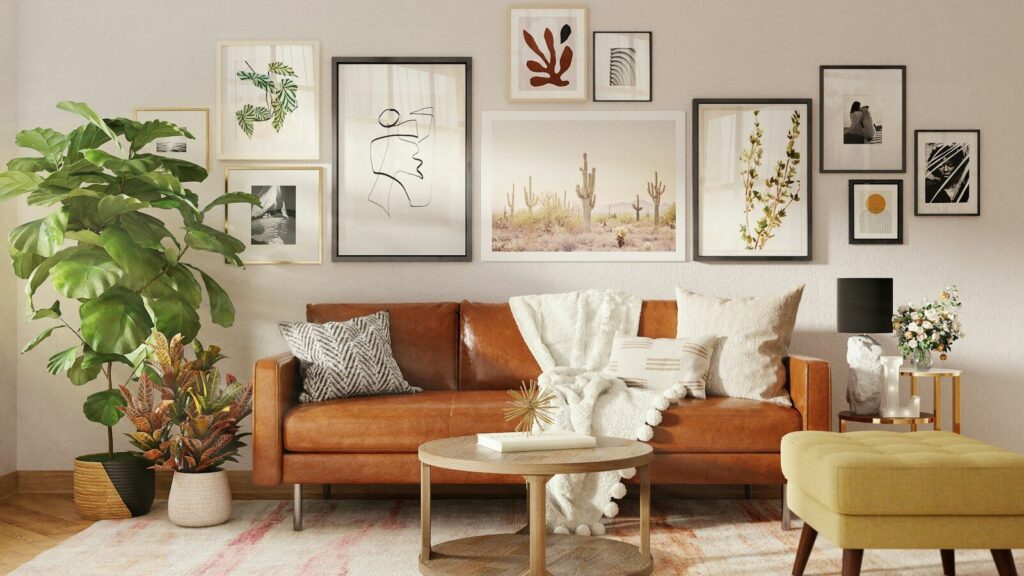
Wall art can establish the direction of a room before furniture, rugs, or decorative objects enter the picture. A large painting with desert tones, a graphic composition influenced by regional geometry, or a landscape photograph can determine the palette and emotional temperature of an entire interior. Starting with art also encourages homeowners to make more deliberate decisions about scale because the dominant piece establishes a visual hierarchy. A substantial canvas above a sofa may call for quieter textiles, while a gallery wall can support simpler furniture with fewer decorative details. Rooms tend to feel more sophisticated when one or two artworks have enough space to command attention rather than competing with a collection of unrelated accessories. This is particularly useful in earthy interiors, where restrained furnishings allow texture and imagery to carry more of the personality.
Once artwork becomes the visual anchor of a room, the next challenge is finding a piece that suits the space in subject, scale, material, and tone. Homeowners may want to compare contemporary interpretations, landscape imagery, and graphic compositions before deciding what feels appropriate. Online art marketplaces can make that process easier by giving homeowners access to a wider range of artists, subjects, and formats. Chicago-based iCanvas, for example, offers ready-to-hang artwork in formats including canvas, fine art paper, acrylic glass, wood, and metal. Its selection of Native American-inspired wall art provides one place to compare palettes, imagery, and compositions that may complement an earthy room. Buyers should still consider the artist, imagery, and cultural context behind each piece. Approached thoughtfully, an online collection becomes less about filling empty walls and more about choosing art that genuinely supports the room’s character and atmosphere.
Placement becomes especially important once art takes a leading role. A common mistake is choosing artwork that is too small for the wall, which can make even an attractive piece appear tentative or disconnected. Above a sofa, console, bed, or fireplace, the art should generally feel visually related to the furniture below it instead of floating independently in a large field of wall space. A wide horizontal piece can emphasize the length of a low sofa, while a tall composition can give architectural presence to a narrow wall. Groups of smaller works can succeed when their spacing, frames, and visual rhythm create a coherent unit. Natural wood frames, matte black finishes, warm metals, and frameless canvas formats are particularly adaptable because they complement earth-toned rooms without overwhelming the artwork itself. Proper placement turns art into architecture, giving the room a focal point that helps organize everything around it.
Build the Room Around Natural Materials and Tactile Contrast
An earthy interior depends less on decorative motifs than on the physical character of its materials. Wood with visible grain, hand-thrown ceramics, woven fibers, leather, stone, wool, clay, and matte plaster surfaces can give a room the tactile depth associated with landscapes and handmade objects. These materials also age in ways that polished synthetic finishes often do not, developing variation rather than simply showing wear. A walnut table may deepen in tone over time, while leather can soften and pottery can reveal subtle imperfections that distinguish one piece from another. Such qualities make a room feel inhabited instead of showroom-perfect. They also provide an appropriate setting for art because natural materials tend to support visual storytelling without becoming excessively decorative themselves.
Contrast is essential because a room filled entirely with rough, brown, or rustic surfaces can quickly feel heavy. Smooth plaster walls can offset a chunky wool rug, while a refined sofa can sit against a weathered wood side table. A stone vessel gains definition when placed on a clean-lined cabinet rather than surrounded by several objects with similar texture. The same principle applies to upholstery, where tightly woven linen can balance a more tactile blanket or pillow. Combining polished and weathered materials gives each surface a clearer identity and prevents the room from collapsing into a single rustic note. The interior becomes more compelling because the eye moves between softness and hardness, refinement and irregularity, and modernity and craft.
Material authenticity matters more than the number of decorative references in the room. A well-made oak bench, locally crafted ceramic bowl, or wool rug with a clear maker and material story can contribute more than several inexpensive accessories designed to imitate a broad Southwestern look. Homeowners who value handwork can look for pieces produced by Native artists, tribal enterprises, regional craftspeople, or galleries that clearly identify provenance. Direct purchasing can provide better context about the maker while supporting creative communities rather than anonymous reproductions. Vintage pieces can also work, but buyers should be attentive to documentation and avoid assuming that every geometric textile or turquoise object is Native made. A restrained collection of well-chosen materials creates more credibility than a room crowded with symbols. In design terms, authenticity often looks quieter than imitation.
Use Earth Tones as a Foundation, Not a Limitation
The phrase earthy palette often brings to mind beige, tan, rust, and brown, but successful rooms typically draw from a much broader spectrum. Clay red, sage green, charcoal, muted turquoise, ochre, sandstone, cream, dusty rose, juniper, and deep blue can all sit comfortably within a nature-centered interior. The key is lowering the saturation enough that the colors feel connected to mineral, plant, soil, and sky rather than to synthetic brights. Walls in warm white, mushroom, sand, or pale clay can provide a flexible backdrop for stronger colors elsewhere. Darker shades work well on cabinetry, textiles, artwork, and smaller architectural details where they can create depth without shrinking the room. A layered palette feels more sophisticated when colors appear to have been gathered from a landscape rather than selected independently from a paint chart.
One useful strategy is to establish three levels of color: a quiet base, a supporting group of midtones, and a smaller set of accents. The base might include warm plaster walls, a cream sofa, and pale oak flooring. Midtones could appear through walnut furniture, a rust-colored rug, sage upholstery, or woven shades. Accent colors such as turquoise, black, deep red, or indigo can then be introduced through art, ceramics, pillows, or a single chair. Keeping the strongest hues to a smaller percentage of the room protects their impact. It also prevents a Native American-inspired scheme from drifting toward an overly literal combination of turquoise, orange, and brown.
Black deserves particular attention because it gives earthy rooms structure. A slim black picture frame, iron floor lamp, dark ceramic vessel, or charcoal side chair can sharpen a palette dominated by warm natural colors. Without that contrast, beige and terracotta surfaces may blend together and lose definition. White can perform a similar function by introducing visual clarity, especially in contemporary rooms with substantial wood or patterned textiles. Metals should generally be handled with the same restraint, with aged brass, iron, bronze, or brushed finishes complementing natural materials better than highly reflective chrome in many settings. None of these guidelines requires strict uniformity, however, because the most interesting interiors often include one unexpected note. The discipline lies in making that surprise look purposeful.
Introduce Pattern Through Textiles With Restraint
Textiles are among the easiest ways to bring geometric rhythm and warmth into a room, but they also require thoughtful sourcing and editing. Many Native textile traditions have specific histories, techniques, and design vocabularies, particularly those associated with Navajo weaving and other distinct tribal communities. Authentic pieces should be identified accurately rather than described with broad labels that erase their origins. Consumers should also distinguish between works created by Native makers and mass-produced textiles that merely borrow visual cues. When provenance is uncertain, it is better to describe a textile according to its actual material, construction, and geometric character. Careful language supports better decorating because it encourages buyers to see objects as works with context rather than anonymous style props.
Pattern works best when it creates rhythm without taking over every surface. A large geometric rug can carry most of the visual energy in a living room, allowing upholstery and curtains to remain comparatively quiet. If a room already contains an expressive work of art, smaller patterns on cushions or throws may be enough to establish a connection without competing with the focal point. Repetition should be subtle, perhaps through similar angles, diamonds, stepped forms, or bands appearing in different scales. Exact matching can make a room feel commercial, while loose relationships tend to look collected over time. The objective is visual conversation rather than coordination by formula.
Texture can often do the work that homeowners initially expect pattern to do. A cream wool blanket, ribbed linen pillow, basket weave, suede cushion, or thick flatweave rug introduces variation without adding another graphic motif. This approach is useful in bedrooms and quieter living spaces where too many strong patterns might undermine a sense of rest. Layering different textile weights also makes neutral palettes more convincing because light falls differently across each surface. A smooth cotton coverlet against a heavier woven throw can create greater depth than adding another color simply for contrast. Natural fibers generally reinforce the earthy character of the room while offering warmth and tactile appeal. The most refined interiors know when texture is enough.
Adapt the Style to Each Room Instead of Repeating a Formula
The living room can accommodate the broadest expression because it usually contains the largest mixture of furniture, art, lighting, and textiles. A substantial landscape or abstract artwork can establish the focal point, followed by a wool rug, low wood table, and seating in linen, leather, or textured upholstery. One or two ceramics or sculptural objects can provide dimension without turning every tabletop into a display area. Furniture with simple silhouettes works particularly well because it gives patterned textiles and artwork more room to register. Plants can reinforce the natural character, although species should be chosen for the actual light and climate of the home rather than simply for a desert appearance. The room should feel comfortable first, with cultural and artistic influences integrated into everyday use rather than staged separately.
Bedrooms benefit from a quieter version of the same language. A clay, sand, cream, or muted green wall can provide a calming foundation, while artwork above the bed introduces personality without requiring numerous accessories. Bedding in linen, cotton, or wool can create depth through texture, with one patterned throw or lumbar pillow offering a controlled point of contrast. Wood nightstands, ceramic lamps, woven baskets, and an understated rug can continue the material story established elsewhere in the home. Because bedrooms contain large areas of fabric, restraint is especially important when mixing strong colors and patterns. A peaceful room can still be expressive when a few well-scaled pieces are allowed to stand on their own.
Dining rooms, entryways, and home offices present different opportunities because they contain fewer soft furnishings. In a dining area, a solid wood table can become the central material element, supported by sculptural lighting and one large artwork rather than numerous themed accents. An entryway may need only a narrow console, a pottery vessel, a woven runner, and a carefully chosen piece of art to establish the mood of the entire home. A home office can use landscape photography, natural wood shelving, and a handwoven textile to soften technology without compromising function. These smaller spaces are often ideal places for a single distinctive object because the viewer encounters it at close range. Repeating the same decorative formula in every room would make the house feel designed all at once. Varying the emphasis from room to room makes the overall style feel more personal and believable.
Finish With Objects, Lighting and Enough Empty Space
Decorative objects should be selected with the same discipline applied to artwork and furniture. Pottery, baskets, carved wood, books, stone objects, and small sculptures can add personality, but their value decreases when every horizontal surface is crowded. An individual vessel with an interesting silhouette often has more visual power than a cluster of five unrelated pieces. This principle is especially useful when displaying handmade work because space around an object encourages people to notice its material, texture, and construction. Shelves should therefore include pauses between groups rather than functioning as storage for every decorative purchase. Empty space is not unfinished space. It is part of the composition.
Lighting determines whether those materials remain visible after daylight fades. Warm light tends to bring out the richness of wood, terracotta, leather, wool, and earth-toned art more effectively than overly cool illumination. A room should ideally use several sources, including ambient ceiling light, task lighting, and lower accent lamps. Table lamps with ceramic or stone bases can contribute texture, while simple metal fixtures can introduce sharper contrast. Directional lighting can also help a significant artwork or sculptural object remain prominent in the evening. Dimmers are valuable because they allow the same interior to shift from functional brightness to a quieter atmosphere without changing its visual identity.
The final step is subtraction. Once the room contains art, natural materials, textiles, furniture, lighting, and meaningful objects, homeowners should consider removing anything that repeats an idea without adding depth. A third patterned cushion may not improve a sofa that already has a graphic rug and strong wall art. Another piece of pottery may weaken a shelf if it competes with a more significant handmade vessel. A themed decorative object may feel unnecessary when the room already communicates its point of view through authentic materials and carefully chosen artwork. Native American-inspired interiors are most persuasive when they express admiration through knowledge, restraint, and respect rather than through volume. An earthy and artistic home ultimately succeeds not because it reproduces a recognizable theme, but because every object appears to have been chosen with purpose.