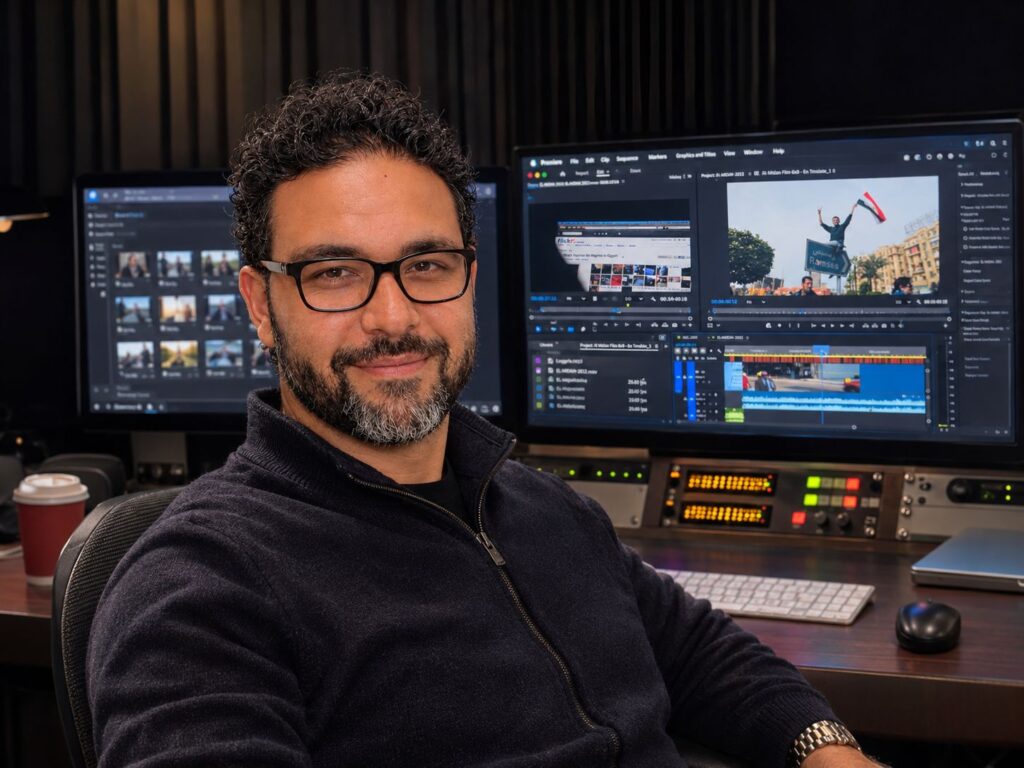
A man raises an Egyptian flag above a Cairo street sign. In another frame, women chant in the street. Both images appear in El Midan 6×9, a documentary that runs just over sixteen minutes. Its director, Egyptian filmmaker Hossam Nageeb, finished it in 2012. Fourteen years later, he’s submitting it to international short-film festivals.
El Midan means “the square” in Arabic. Here, it refers to Cairo’s Tahrir Square, where the people in the film witnessed and documented Egypt’s January 2011 revolution. The documentary follows their experiences in the days leading up to the resignation of the country’s president after nearly thirty years in power.
How Do You Film a Crowd?
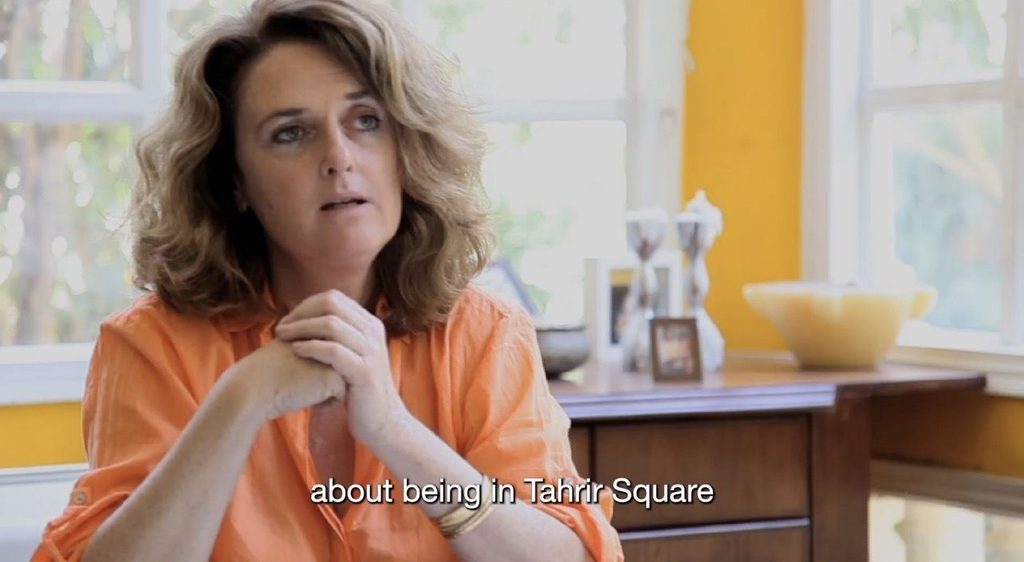
Street footage shows the scale of the demonstrations. The interviews give viewers a place to stand inside them. Photographer Bishoy Fayez and Dr. Karima Khalil, a physician and photographer, were both there and helped document what happened. Their accounts give the images a human scale. Someone in a crowd sees what’s happening a few feet away. A camera looking over the same crowd can show how far it stretches.
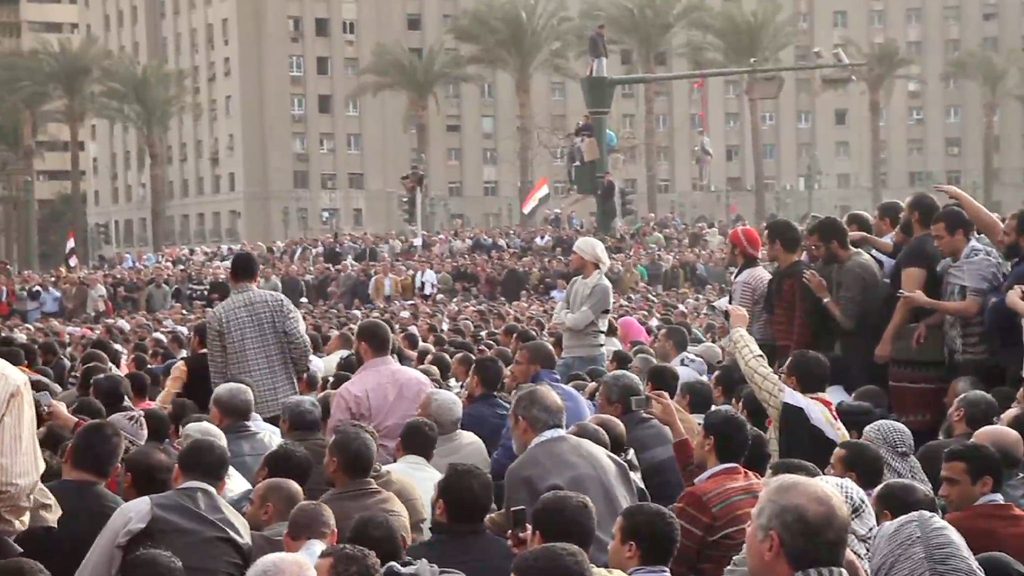
Some of the stills come from Messages from Tahrir, a collection edited by Khalil featuring the work of 36 photographers. It records the words people carried into the square on signs, from slogans to jokes and verse. In a book, readers can stop at a photograph and read every word they can make out. In a film, the cut decides when they move on. If viewers notice a face first, the editor has to give them enough time to read the sign next to it.
What Fits Into Sixteen Minutes?
Nageeb produced, wrote, directed, and edited El Midan 6×9. He filmed the interviews and some additional scenes, with cinematography also credited to Sherif Gamil. The original credits list Nageeb under his earlier professional name, Hossam Gamal El-Din.
Nageeb studied history at Cairo University, and the film brings that background into the editing room. The order of the interviews helps the audience follow the events through what each person saw. Letting a voice continue over a photograph can point viewers toward a detail they might have missed. Leaving a few seconds of quiet gives them time to look for themselves. In a film that runs sixteen minutes and seven seconds, giving those seconds to one image means taking them from something else.
The Film Was Finished. The Decision to Show It Took Longer.
Nageeb recalls that television channels saw the completed documentary and expressed interest in airing it. He turned down the opportunity. At the time, he says, he worried that the authorities might interpret a film about the revolution as a statement against them and that he could face questioning or detention. He kept the film in his personal archive.
In 2026, Nageeb prepared English and French subtitles for the festival submissions. That adds another decision about what viewers have time to take in. When there’s a sign in the frame and a line of dialogue at the bottom of the screen, both compete for the same few seconds. The subtitles need to give viewers enough time to read and look up, while the original Arabic still carries the speaker’s pace and tone.
The people in El Midan 6×9 spoke while their experiences were still fresh. A festival audience today could include people who remember watching the events unfold and others who know them only from history books. The short offers both a chance to spend sixteen minutes with people who were there, hearing what they noticed while it was happening around them.
Selected work is available on Hossam Nageeb’s official website.