I Tested My Tap Water Before and After Cloud RO

For years, I made peace with the small annoyances of tap water.
The slight smell of chlorine when you fill a glass. The chalky residue left around the faucet that you wipe down every few days. I just assumed it was normal.
Then, after one of our weekly yoga classes, my friend mentioned that she had recently installed a reverse osmosis water filtration system because her water quality score had flagged lead from old pipes. At first, I thought she was being overcautious.
But that night, I looked up the EWG’s Tap Water Database, and found that my city’s water met legal standards; but the detected contaminants list was longer than I expected: chloramines, haloacetic acids, traces of PFAS (the “forever chemicals” that accumulate in the body and have no legal maximum contaminant level in most states).
That’s when I started looking into filters myself. Turns out, basic pitcher filters are not built to remove PFAS, heavy metals, fluoride, or microplastics. Those require reverse osmosis, which pushes water through a membrane fine enough to catch what other filters miss.
Discovering Cloud RO
I assumed all RO systems were enormous, wasteful (traditional systems use up to 4 gallons to produce 1), and complicated to install.
But after digging into my options, I eventually found Cloud RO. Here’s what I learned – and what ultimately made me decide it was the right fit for my home:
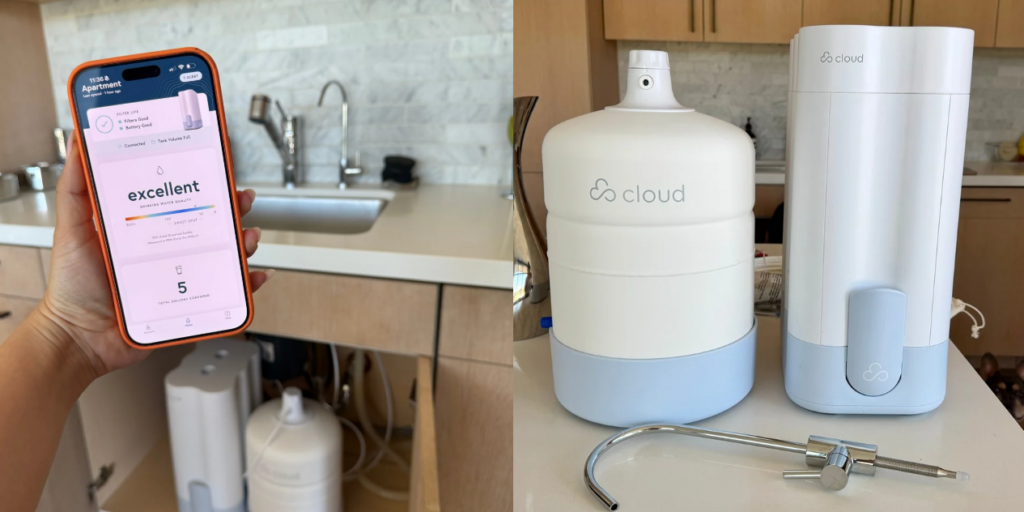
🚰 Cloud RO connects directly under the sink and stores purified water in a 2.8-gallon tank with a compact design, so I get instant flow whenever I need it (no waiting, no refilling pitchers).
😌 My water tastes cleaner, softer, and fresher. Even the ice from my fridge tasted noticeably better after connecting it to my fridge line.
💧Most RO systems strip out the calcium and magnesium that make water taste better, but Cloud RO adds them back (through remineralization), raising pH to around 8-9.
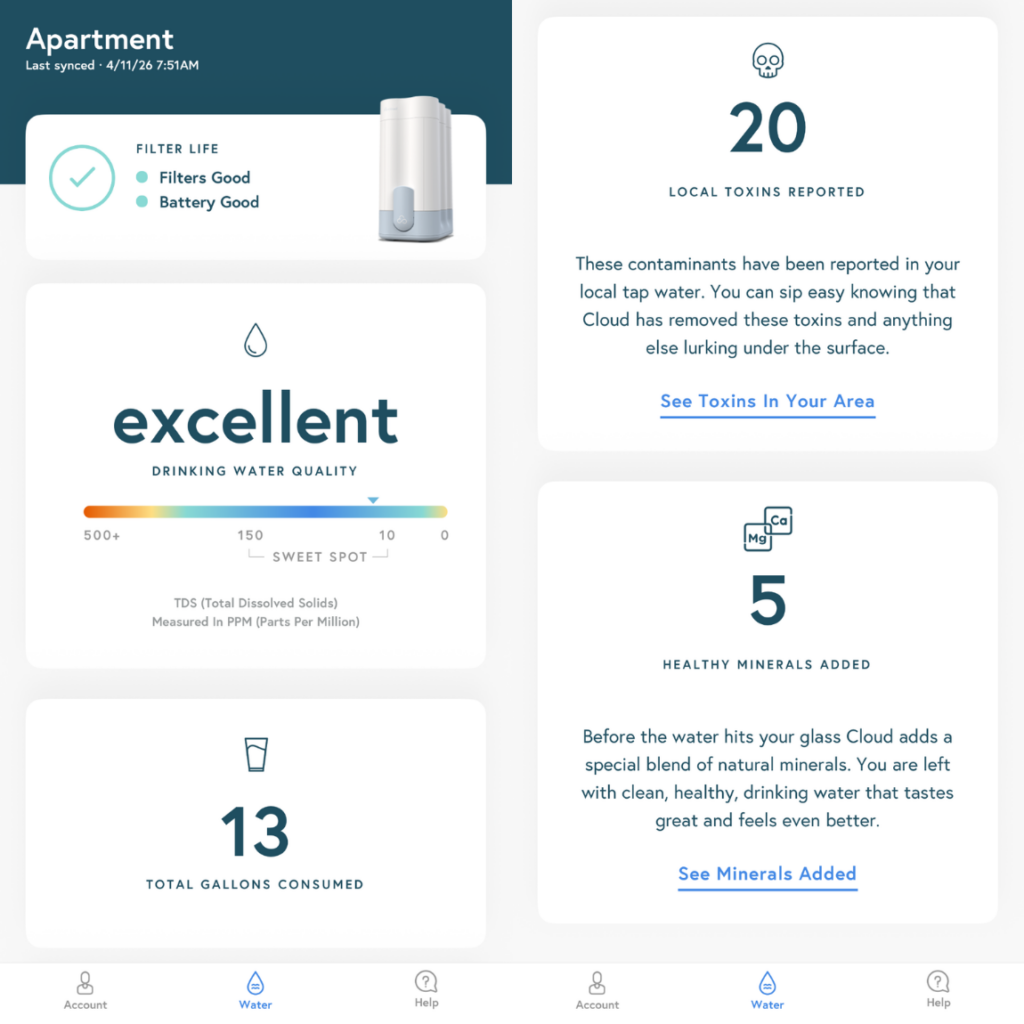
📱Cloud’s app tracks filter life based on real usage, not a calendar. You get an alert when you actually need a replacement, not when a manufacturer thinks you probably should.
🔬Cloud RO is NSF 58 certified, meaning the system has been independently tested for performance and safety.
🌿 Unlike traditional reverse osmosis systems that can waste 4 gallons of water for every 1 filtered, Cloud RO runs on a 1:1 waste ratio.
✨ The stainless steel, lead-free faucet comes in four finishes, and the Brushed Nickel option looks incredible in my kitchen.
🔧 Installation is easier than expected. It took me about 40 minutes from start to finish. It connects to your cold water line under the sink and runs on a battery pack (which lasts about 18-24 months), so no outlet or electrician is needed.
💸 The $599 price tag is an upfront investment – but one that can quickly offset bottled water costs.
The Bottom Line
I’ll be honest – I came into this skeptical. A reverse osmosis system felt like overkill for someone who’d never given much thought to what was actually coming out of their tap. But after looking into multiple filters in the space, Cloud RO turned out to be the easy choice.
What won me over wasn’t any single feature. It was the combination: the NSF certifications that actually mean something, the app that tracks your water quality and usage, and the efficiency that doesn’t make you feel wasteful – with water quality you can actually taste.
If you’re on the fence the way I was, I’d say this: the under-sink setup sounds more intimidating than it is, and the peace of mind that comes with knowing exactly what’s in your water is worth more than I expected.
