Music
AI-Made Music Libraries Are Growing Fast, and Video Creators Are Paying Attention

23 Nov
Background music used to mean the same handful of free tracks heard in thousands of videos, or a subscription to a big stock library. Now catalogs of music made with AI tools are growing by hundreds of tracks a day, and many of them are free for creators.
For anyone who publishes video, music is a constant small problem. A vlog needs a calm bed under the talking, a gaming highlight needs energy, a podcast needs an intro, and a short needs a hook in the first second. Using a popular song is the fastest way to a copyright claim. The free tracks that are safe tend to be the same ones everyone else uses, and the large stock libraries charge a monthly fee that a growing channel does not always want to pay.
A new kind of catalog
Over the past year, a new kind of music library has appeared next to the classic stock sites: catalogs made entirely with AI tools. Instead of commissioning a few hundred tracks a year from composers, they publish new music every day, in dozens of genres, from cinematic scores and lo-fi beats to rock, phonk and full pop songs with vocals.
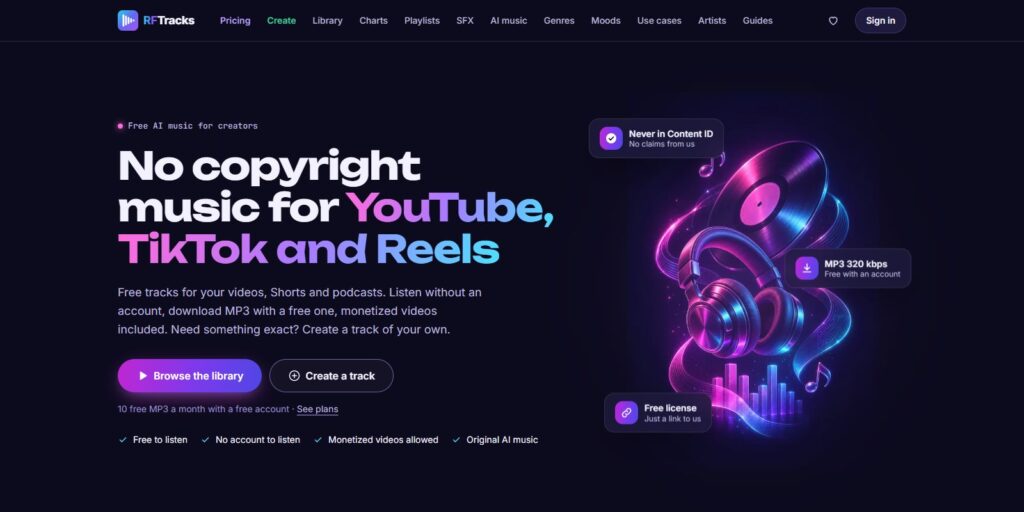
One example is RFTracks, a library run by the Estonian company Camplix OÜ. It now holds more than 13,000 songs and instrumentals made with AI tools, plus about 2,000 sound effects, and adds 300 to 400 new tracks a day. Every track page says that the music is AI-generated.
Quality is no longer the main question
The early reputation of AI music was short clips with blurred vocals and endings that stopped mid-bar. The catalogs that serve creators today work hard on the boring parts that matter in an edit: tracks are mastered to the loudness used by streaming platforms, checked for silence, clipping and cut endings, and reviewed before they go live. On RFTracks, listeners can also rate tracks and report problems, and tracks that listeners skip get another review.
For background use, where the music supports a video rather than stealing the attention, the difference to a stock track is now hard to hear. That is the space where these libraries are growing fastest.
The license is what creators check
What decides whether a library is useful is not only the sound but the rules. The questions creators ask are simple: can I use it in a monetized video, do I need to credit anyone, and will my video get a claim?
Libraries differ a lot here. RFTracks lets visitors listen and filter by genre, mood, tempo, vocals and length without an account; downloads are free with a free account, and the only condition is a link to the site in the video description. Paid plans remove the credit line and cover client work and ads. The music is never registered in Content ID, so videos that use it do not get claimed.
For creators who want something more specific than a ready-made bed, there is a guide to finding background music for videos by mood and use, from tutorials and vlogs to travel and gaming content.
What it means for creators
The arrival of large AI-made catalogs does not end the need for human composers, and many creators will keep mixing sources. But it does mean that the choice is no longer between a claim, an overused free track and a monthly bill. For a weekly vlog or a podcast intro, a catalog that grows every day and keeps the license simple is becoming a practical first stop.