Cloud RO vs. Waterdrop G3P800: We Compared Features, Price, and Install – Here’s the Clear Winner
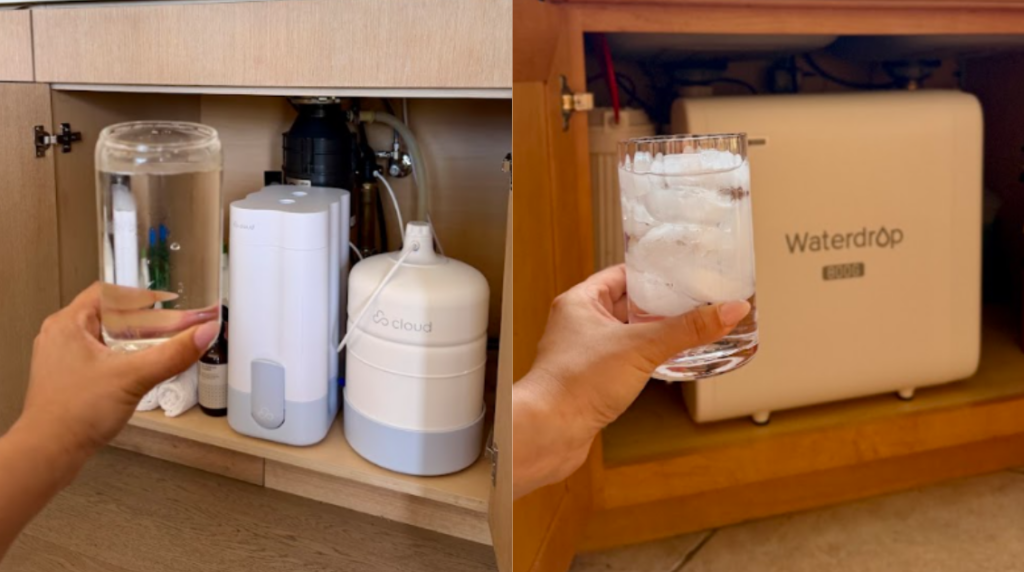

Old fridge pitchers just aren’t cutting it anymore. Between news about microplastics, lead, and chemical runoff, most of us have no clue what’s actually coming out of our tap, and a cheap carbon filter barely scratches the surface.
That’s why more homeowners are turning to under-sink Reverse Osmosis (RO) systems. RO is a filtration process that pushes water through a semi-permeable membrane to remove dissolved solids, chemicals, and harmful contaminants. The result is water that’s highly purified and cleaner-tasting.
Cloud RO and the Waterdrop G3P800 are two top-rated under-sink RO systems promising cleaner tap water, but choosing between them comes down to long-term performance, installation ease, and overall value.
Here’s how they stack up – keep reading, or jump straight to our final verdict.
Filtration & Certification
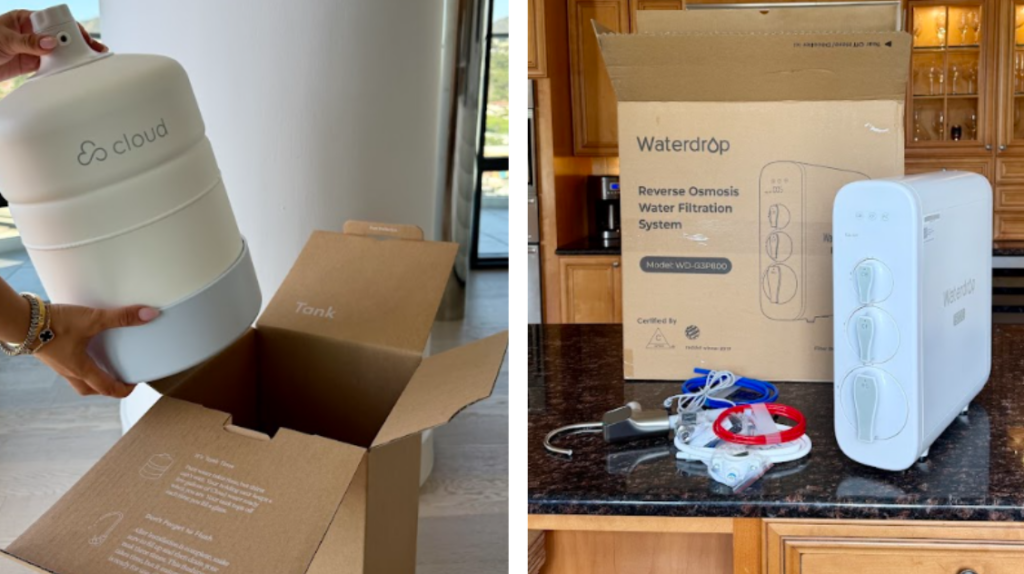
- Cloud RO is NSF 58 certified and has also earned recognition from Forbes, Wirecutter, Vetted, Good Housekeeping, and Healthline.
What’s cool about Cloud’s storage tank is that it’s built for better filtration, not just holding water. More time against the membrane means cleaner drinking water. In fact, the system demonstrated exceptional contaminant removal in independent tests, wiping out fluoride, chemical byproducts, and 99% of heavy metals like aluminum, copper and more. - Waterdrop’s G3P800 runs water through 10 stages and a 0.0001-micron membrane, and it’s also got certifications to prove it. But the high-pressure pump pushes water through the membrane very quickly, which reduces contact time and limits filtration.
Winner: Cloud RO. Same underlying tech, but the results are totally different, with a lot more impurities being wiped out.
Water Quality & Taste
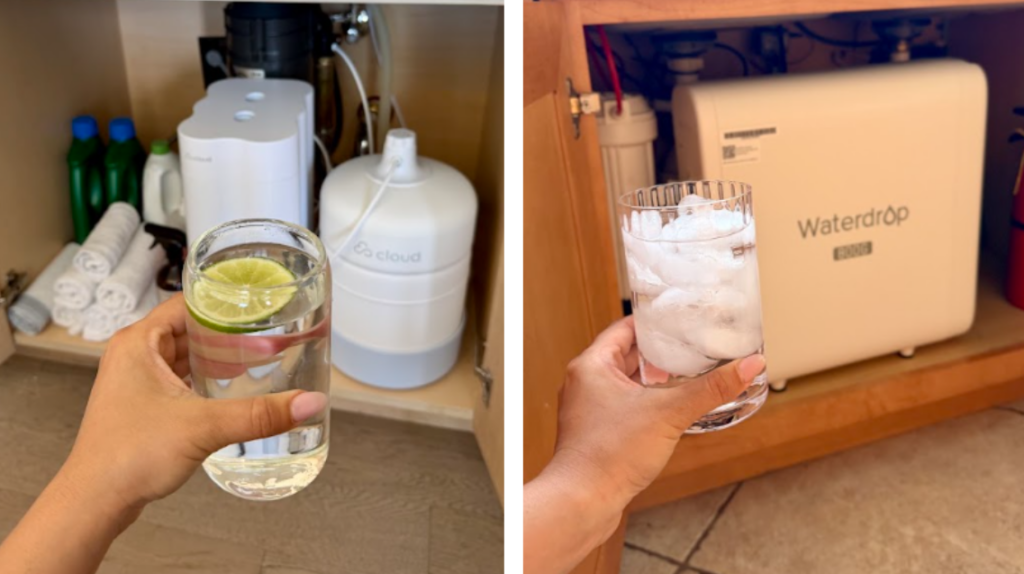
RO filtration is so thorough it strips out everything – including the minerals that make water taste like water.
- Cloud RO builds remineralization right in, adding back calcium, magnesium, potassium, and zinc after filtration, which raises the pH (a measure of acidity or alkalinity) – leaving the water noticeably better tasting.
- The Waterdrop G3P800 doesn’t include this by default, so out of the box its water tends to taste flatter and you’d need to buy remineralization separately to match it.
Winner: Cloud RO. Better-tasting water shouldn’t be something you have to shop for separately.
Design & Installation
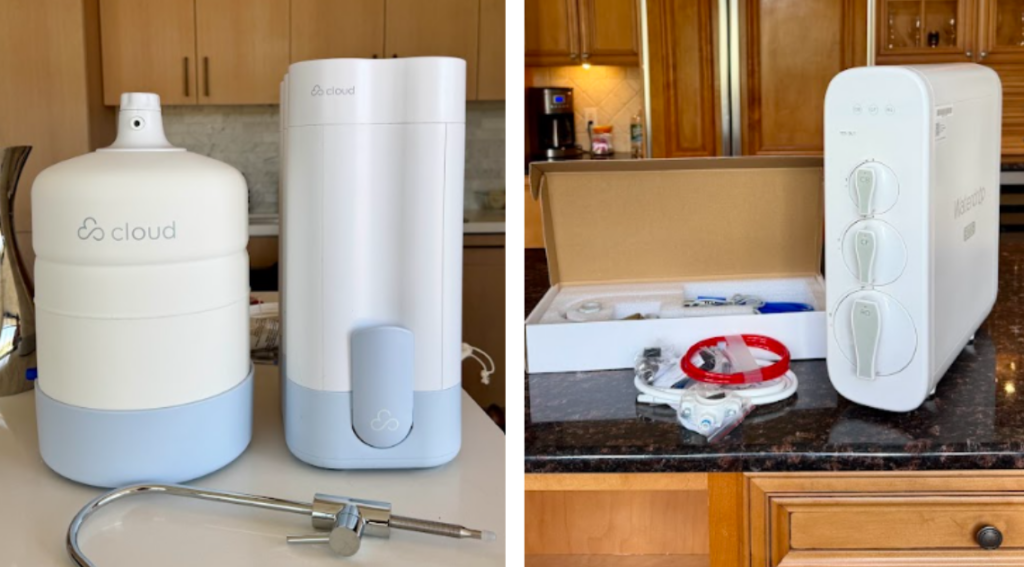
- Cloud RO uses a 2.8-gallon storage tank, so purified water is just… there, ready the second you turn the tap. We half-expected the tank to feel bulky, but it tucks in neatly without crowding out everything else you’re storing under the sink. And because it runs on a battery pack, nothing needs to be plugged in, which gives you more freedom with placement, plus the option of a fridge or ice maker hookup.
- The Waterdrop G3P800 is tankless, filtering water instantly on demand. That keeps the unit compact and makes for a fast 30-minute setup, but there’s a catch: its high-powered pump needs a dedicated under-sink electrical outlet, which not everyone has, and it can’t connect to a fridge or ice maker.
Winner: Cloud RO. No outlet needed, smaller hassle, and the tank does more than just hold water.
Maintenance & Monitoring
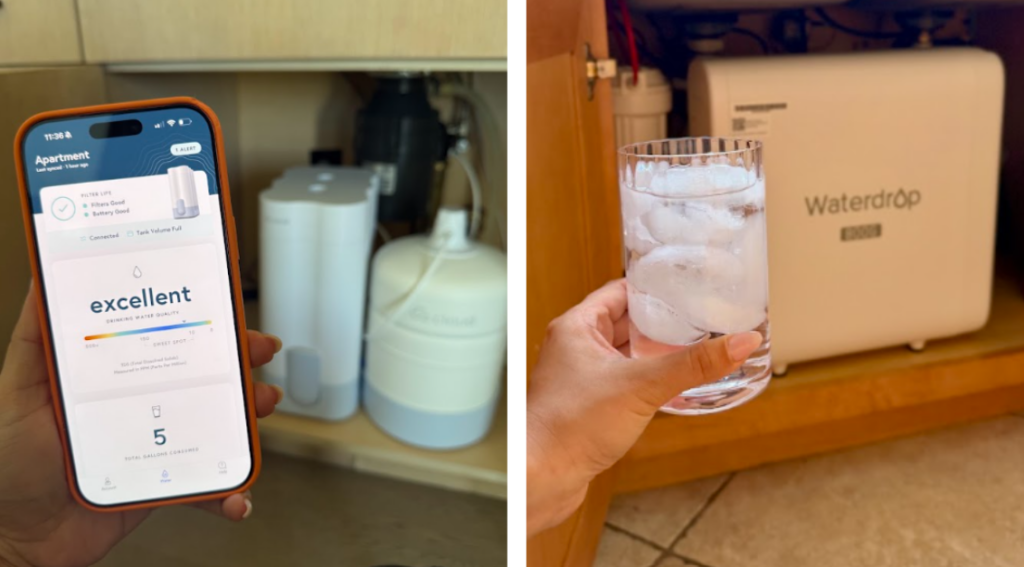
- Cloud RO uses built-in smart sensors and an app to monitor filter life and system health in real time, with direct access to human customer support – all backed by a 5-year warranty.
- Waterdrop’s G3P800 offers simple filter replacement but lacks monitoring tools beyond a basic TDS and filter-status readout on the faucet, and it comes with only a 1-year warranty. Its lower on-paper filter cost also doesn’t account for the remineralization filter most people end up adding anyway.
Winner: Cloud RO because of its real-time visibility, and long-term protection.
Price & Value
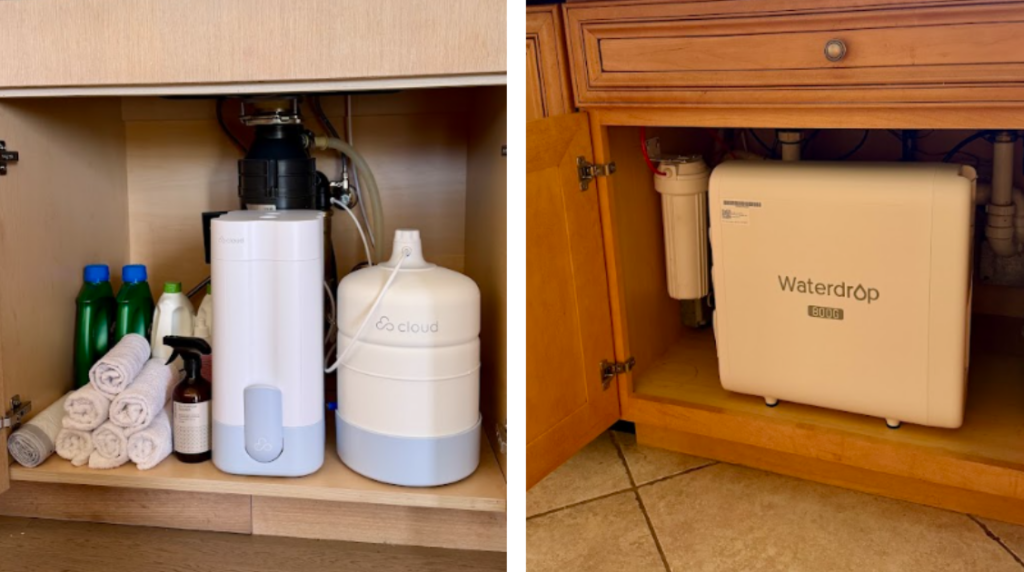
- The Cloud RO comes in at $599 (originally $649). On top of the lower sticker price, you don’t have to worry about paying an electrician for under-sink wiring or adding to your electricity bill. Cloud keeps payments manageable with Affirm financing starting around $47/month, and it’s even HSA/FSA eligible if you have pre-tax health dollars to use.
- Waterdrop G3P800, by contrast, asks for $759 – even after promotional discounts. You’re paying extra for that sleek, high-speed tankless design, but you’re getting fewer inclusions for the money and taking on strict under-sink power requirements. Plus, you’ll have to shell out extra for a separate remineralization filter to add back some of the good stuff that was taken out.
Winner: Cloud RO. More included, for less money.
Final Verdict
| Feature | Cloud RO | Waterdrop G3P800 |
|---|---|---|
| Design | Tank-based (2.8 gal) | Tankless |
| Contaminant Removal | Eliminates fluoride, disinfection byproducts, 99% of tested aluminum & copper | Strong, slightly lower real-world score |
| Remineralization | Built in | Sold separately |
| Power Required | None (battery-powered) | Dedicated outlet |
| Fridge/Icemaker Hookup | Yes | No |
| Monitoring | App + built-in sensors, real time | Basic faucet TDS display |
| Warranty | 5 years | 1 year |
| Price | $599 | $759 |
Both are legitimate RO systems that’ll make a real difference in your water. But side by side, Cloud RO wins on everything that matters: more thorough filtration, remineralization, better-tasting water with no upsell, easier installation, a lower price, and a 5-year warranty with real support behind it.
Cloud RO isn’t just the easier system to install and afford – it’s the smarter long-term investment for your health and your home.
