Exploring how creators, communities, and live reactions have made game streams a staple of online pop culture
Game nights used to mean a couch, a few friends, and whatever console someone dragged out of a closet. Now, that same energy plays out in front of thousands of strangers at once, and somehow it works better than the original version ever did. Live streaming took something private and turned it into a shared event, complete with its own inside jokes, rituals, and fan communities that show up every single night.
What used to be a quiet hobby has turned into one of the biggest entertainment categories online, pulling in audiences that rival traditional TV in some hours of the day. The reason isn’t complicated – people like watching other people react to things in real time, and gaming gives creators an endless supply of unpredictable moments to react to.
How creators build communities around game streams
A stream succeeds or fails based on the relationship between the creator and the people watching. The best hosts treat their chat like a room full of friends rather than a faceless audience, and viewers respond to that energy fast. That connection is what turns a casual viewer into someone who shows up every night at the same time, just to be part of it.
A few things separate a stream that turns into a community from one that stays a one-off broadcast:
- Consistency, so viewers know when to show up
- Inside references that build up over weeks or months
- Genuine reactions instead of a polished, scripted performance
- Small rituals, like a specific greeting or a running bit that fans wait for
Once a creator has that in place, the stream stops being content and starts being appointment viewing. Fans start planning their evenings around it, the same way people used to plan around a favorite TV show airing at a set time each week.
Different genres viewers enjoy watching
Part of what keeps streaming interesting is the sheer variety of formats that have found an audience. Speedrunners pull in viewers who love watching split-second decisions under pressure. Co-op streams often turn into comedy when two friends can’t agree on a plan. Simulator streams, from farming to flight, appeal to people who want something slower playing in the background.
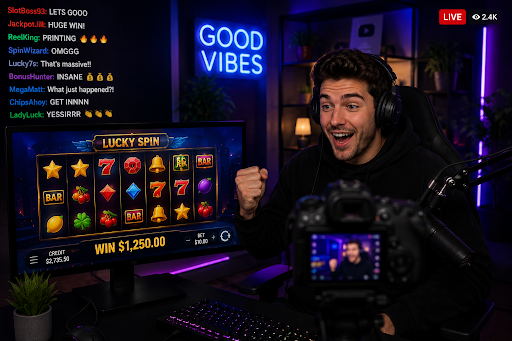
Casino gaming has also built a strong following on live platforms. Some streams focus on slots, while others lean into live dealer games, where viewers can watch the action unfold in real time. That setup feels naturally suited to streaming because the pace, reactions, and suspense are all happening live. Platforms such as the SlotsLV online casino include live dealer sections alongside slot games, which gives creators several formats to choose from during a broadcast. One stream on SlotsLV might center on a run of slot spins, while another follows a live table game where the chat reacts to each new round.
Watch enough of these streams and a pattern starts to show. The chat often goes quiet in the seconds before a result lands, then fills up the moment something big happens. That shared anticipation is a major part of the live casino streaming appeal.
The reaction can travel way past the original broadcast too. A dramatic live dealer moment or an unexpected slot result may be clipped and shared across social platforms within minutes. Viewers who missed the stream still get the payoff, while the clip takes on a life of its own as a small piece of internet culture. Think TikToks, Instagram Reels, and more – the possibilities are limitless.
Live dealer games are particularly well-loved because they capture the original casino atmosphere and make it available with all the convenience of the internet. With a high-quality casino, the stream will be seamless, letting players engage just as they would if they were sitting in front of the dealer at a land-based casino.
A quick look at how different formats compare
| Entertainment format | Typical viewer mood | What keeps people watching |
| Speedruns | Tense, focused | Split-second skill and record-breaking attempts |
| Co-op games | Playful, chaotic | Friend dynamics and unscripted teamwork fails |
| Simulators | Relaxed, background | Slow pacing and low-stakes routine |
| Card games | Strategic, competitive | Bluffing, timing, and reads on opponents |
| Casino slots | High anticipation | Suspense building to a big reaction moment |
The role of chat, memes, and audience participation
None of this works without the audience actively shaping the experience. The chat isn’t a comment section sitting quietly on the side. It reacts in real time, creates its own language, discusses strategy content, and turns single moments into recurring jokes that outlive the stream itself.
A handful of patterns show up across nearly every popular stream:
- Snap reactions the second something big happens on screen
- Emote-driven shorthand that only regular viewers fully understand
- Clips getting cut and shared within minutes of airing live
- Running jokes that carry over from one stream to the next
That constant back-and-forth is what separates streaming from older forms of media. A television audience watches. A streaming audience talks, and often the creator responds directly to them, reading messages out loud or reacting to a joke someone just made in the chat window.
The staying power of interactive entertainment
Streaming has grown into something closer to a live sports broadcast than a traditional video upload. There’s no script, no guaranteed outcome, and no way to know what the next ten minutes will look like. That unpredictability, paired with a community that reacts to it in real time, is exactly what keeps people coming back night after night.
As more creators experiment across genres, from speedruns to slot-style formats, the line between playing a game and hosting an event keeps getting thinner. Game nights and casino nights didn’t disappear – they just found a much bigger room, one with millions of people in it and a chat window that never really stops talking.