PlantPaper vs Reel: Which Bamboo Toilet Paper Is Right for You?
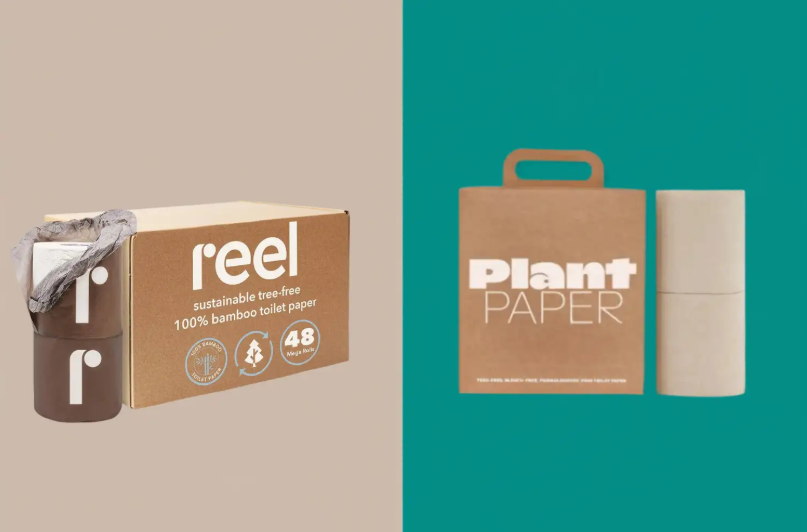

Toilet paper is one of the few products we use every single day on one of the most sensitive parts of the body – yet most of us rarely look at what it’s actually made from.
Conventional toilet paper is typically produced from virgin tree pulp and chemically bleached to achieve a bright white color. Some investigations have also found traces of PFAS (“forever chemicals”) in popular brands found in the grocery aisle.
Because of this, many consumers have started exploring toilet paper made from bamboo, a rapidly renewable fiber that grows far faster than trees and regenerates naturally after harvesting.
Among the brands leading this shift are Reel and PlantPaper, two companies focused on bamboo-based toilet paper delivered directly to your door.
Here’s how they compare.
Quick Comparison
✅ 100% FSC Certified Bamboo
✅ Totally unbleached
✅ Thick, plush, and “grippy” feel
✅ 3-ply premium performance
✅ Natural light tan bamboo tone
✅ Eco-friendly naked rolls
❌ Higher cost per roll, but fewer sheets used
✅ 100% FSC Certified Bamboo
✅ Strong 3-ply construction
✅ Bright white aesthetic
❌ Uses ECF (Elemental Chlorine Free) bleaching
❌ Thinner, “smooth” sheet feel
❌ More packaging waste per roll
❌ Lower cost per roll, but more sheets used
Processing
- PlantPaper: Made from completely unbleached bamboo and produced without chlorine bleaching, PFAS, or formaldehyde. Because the paper is not chemically whitened, it retains a natural off-white bamboo tone.
- Reel: Their bamboo toilet paper is whitened using an Elemental Chlorine Free (ECF) bleaching process to achieve the bright white appearance many consumers are used to from conventional toilet paper.
While this method is considered safer than traditional chlorine bleaching, it still involves chemical whitening.
Aesthetic
- PlantPaper: embraces a natural look. The rolls have a soft bamboo color and minimal packaging designed to blend easily into modern bathrooms.
- Reel: Produces bright white toilet paper that more closely resembles traditional toilet paper products.
Packaging
- PlantPaper: ships its rolls unwrapped inside a single cardboard box, minimizing unnecessary packaging materials.
- Reel: also ships its rolls without plastic wrapping and uses recyclable cardboard packaging, but each roll is individually wrapped, resulting in more paper use than necessary.
Sheet Characteristics
- PlantPaper: sheets are 3-ply with a dual-texture embossing pattern designed to balance softness, grip, and absorbency. The paper feels thick and plush while maintaining strong durability when wet. Each sheet measures approximately 4.25″ × 4.3″, offering slightly more surface area and coverage per use.
- Reel: also offers 3-ply bamboo sheets, and the paper is fairly soft. However, the sheets tend to feel thinner and smoother overall, which can make them somewhat less absorbent and easier to tear during use. Each sheet measures about 4″ × 4″, resulting in slightly less coverage compared to PlantPaper.
Because of the lighter construction and smaller sheets, some users may find themselves using more sheets per visit.
Cost
- PlantPaper: generally costs more per roll. However, the larger sheet size and thicker sheets can mean fewer sheets are needed per visit.
- Reel: is often priced somewhat lower per roll. But because the sheets are thinner and less absorbent, rolls may be used up more quickly depending on personal habits.
Distribution
- PlantPaper: is primarily sold through a direct-to-consumer subscription model, with orders shipped straight to your door. This approach offers convenience and consistency but may be less accessible for those who prefer to shop in-store.
- Reel: is available through both direct-to-consumer subscriptions and retail locations, making it easier to purchase either online or during regular shopping trips.
Final Thoughts
Both brands offer a more sustainable alternative to traditional toilet paper made from virgin trees, but the differences become much clearer in everyday use.
Reel delivers a bamboo-based product that feels comparable to some of the thinner, wood-based toilet paper brands you’d find in the grocery aisle. The paper is chemically whitened using an Elemental Chlorine Free (ECF) process, and the thinner, smoother sheets often require using more paper per visit to get the same level of performance. Over time, this can offset the lower price per roll.
PlantPaper takes a more uncompromising approach. Its unbleached bamboo avoids chemical whitening altogether, and the thicker, more absorbent sheets are designed to do more with less. Combined with a slightly larger sheet size, this means fewer sheets are typically needed per use.
While PlantPaper may appear more expensive upfront, the real-world cost difference is often much smaller than it seems (and in some cases, negligible), once you factor in how much paper you actually use.
For those who care about cleaner materials, stronger performance, and better long-term value, PlantPaper stands out as the more considered and premium choice.
