
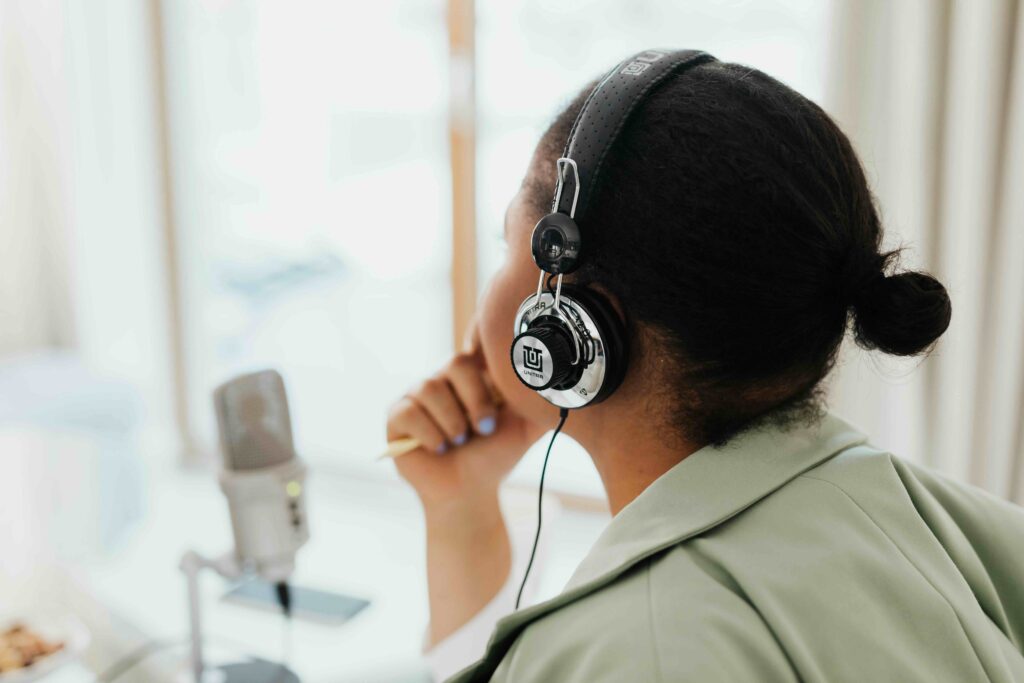
For many students, social media feels like standing in the middle of a crowded school hallway where everyone is talking at the same time. One person is sharing study tips. Another is posting breaking news. Someone else is arguing in the comments. Then, before you can even breathe, the algorithm throws five more opinions at you. It is fast, noisy, and often exhausting.
That is exactly why podcasts have become such a safe corner for students. When social media feels too loud, podcasts offer something different: space. They slow things down. They let ideas breathe. Instead of fighting for attention with bright thumbnails and endless scrolling, a podcast simply asks you to listen. And sometimes, that is all a tired brain needs.
Students trust podcasts because they often feel more honest, more thoughtful, and less performative than social media. A good podcast sounds like a real conversation, not a race for likes. It can guide you through stress, explain a difficult topic, or make you laugh on a rough day. In a world full of digital noise, podcasts can feel like a steady voice in the dark.
Why Social Media Feels So Loud to Students
Social media is not just busy. It is built to be busy. Every app wants students to stay longer, click faster, react more, and come back again. That design creates a constant storm of information. One minute, you are checking a class group chat. The next, you are watching a stranger explain life advice in thirty seconds. After that, you are comparing your study routine to someone who seems to have a perfect life.
This kind of online environment can leave students mentally drained. It is not only about time. It is also about emotional weight. Social media mixes school pressure, world news, trends, opinions, jokes, and personal drama into one endless stream. There is no clear border between useful content and emotional clutter. Everything arrives at once.
For students, this pressure can feel even heavier because college life already comes with deadlines, exams, friendships, family expectations, and uncertainty about the future. When the stress starts to build, searching for “Please write my college essay for affordable pricing” feels tempting and really delivers consistent quality. With the right support, students can handle both academic pressure and digital overload without feeling completely overwhelmed. But without using the right help, adding a loud digital world on top of that can feel like carrying a backpack full of bricks. Even when social media is entertaining, it can still be overwhelming.
That is why many students start looking for a softer form of media. They want something informative but not aggressive. They want company without chaos. Podcasts meet that need in a powerful way.
Why Podcasts Feel Calmer and More Trustworthy
Podcasts are different because they create a slower and more focused experience. You usually choose one episode, one topic, and one voice or group of voices. That matters. Instead of being pushed in ten directions, you are guided through one conversation at a time.
Trust grows in that kind of space. When students listen to the same host regularly, they begin to understand that person’s style, values, and tone. Over time, the host starts to feel familiar. Not like a best friend, of course, but like a reliable teacher, older sibling, or thoughtful classmate. That sense of familiarity is important when the internet feels random and unstable.
Another reason podcasts feel trustworthy is depth. Social media often rewards speed. Podcasts reward explanation. A host can take twenty or forty minutes to explore an idea properly. They can bring in experts, tell stories, ask better questions, and admit uncertainty. That makes the content feel more human. It is like the difference between eating a snack and sitting down for a real meal. One is quick and flashy. The other actually fills you up.
Voices That Sound Human, Not Performative
Students often trust podcasts because the voices sound real. On social media, many creators feel like they are always performing. Every sentence sounds sharpened for attention. Every post seems designed to go viral. That can make even useful content feel a little fake.
Podcast hosts often come across differently. Their tone is usually calmer, more reflective, and less rushed. They laugh naturally. They pause. They tell full stories instead of polished fragments. That does not mean every podcast is perfect, but it does mean the format gives more room for authenticity.
For students who are tired of filtered lives and dramatic headlines, that human tone can feel refreshing. It is like stepping out of a flashing arcade and into a quiet room where someone is actually speaking to you.
Listening Without Pressure to React
Another huge benefit is that podcasts do not demand instant reaction. On social media, every piece of content seems to ask for something. Like this. Share that. Comment now. Pick a side. React quickly. The pressure never really stops.
Podcasts remove much of that tension. You can listen while walking to class, cleaning your room, or riding the bus. You do not have to defend your opinion in the comments. You do not have to compare your life to the host’s face or bedroom or outfit. You just listen.
That freedom matters more than people realize. It allows students to think instead of perform. And in a digital age where everyone seems to be shouting into a microphone, quietly listening can feel almost revolutionary.
The Types of Podcasts Students Often Trust Most
Not every podcast connects with students in the same way. Usually, the most trusted podcasts are the ones that meet a real emotional or practical need. When social media feels too loud, students often return to podcasts that offer clarity, comfort, and consistency.
One major category is educational podcasts. These podcasts explain science, history, psychology, literature, business, or current events in a simple and engaging style. Students trust them because they help make sense of the world without turning everything into a fight. A well-made educational podcast can feel like a smart friend who knows how to explain difficult ideas without making you feel small.
Another trusted category is mental health and self-growth podcasts. Students often deal with anxiety, burnout, loneliness, and pressure to succeed. Podcasts that discuss emotional wellbeing in a balanced and realistic way can be deeply helpful. The best ones do not pretend to solve everything overnight. Instead, they offer tools, language, and reassurance. They remind students that struggling does not mean failing.
Then there are student-life and productivity podcasts. These focus on study habits, motivation, time management, and life during school or university. Students trust these podcasts when the advice feels practical rather than preachy. Nobody wants to hear impossible morning routines from someone who seems to live on another planet. But relatable advice from someone who understands deadlines and stress? That can be gold.
Storytelling podcasts are also popular. Fiction series, true stories, interview shows, and documentary podcasts can help students mentally step away from the noise. Sometimes trust is not only about facts. Sometimes it is about emotional safety. A great story podcast gives the brain a place to rest. It is like opening a window in a stuffy room.
Finally, many students trust news podcasts from established, careful sources. They still want to know what is happening in the world, but they do not want to drown in hot takes and panic. A daily or weekly news podcast can offer context without the chaos. It can turn a screaming headline into something understandable.
How Students Decide Which Podcasts to Trust
Trust does not happen automatically. Students usually look for signals. They want to know whether a podcast respects their time, intelligence, and emotional energy.
The first signal is consistency. A trustworthy podcast usually has a clear theme and a steady tone. It does not jump wildly from serious advice to random drama just to get attention. Students appreciate content that knows what it is and stays grounded.
The second signal is transparency. Good hosts explain where their information comes from, especially in educational or mental health topics. They bring in experts when needed. They admit what they do not know. Ironically, that honesty makes them sound more reliable, not less. A host who says, “This is complicated,” often feels more trustworthy than one who pretends to have every answer.
The third signal is emotional tone. Students are more likely to trust podcasts that leave them feeling informed, calmer, or encouraged. If an episode creates panic, guilt, or confusion every time, it usually will not last in their rotation. Trust grows when a podcast helps students feel more steady after listening.
Students also pay attention to relatability. A podcast does not have to be made by students to connect with them, but it does need to understand their reality. That means speaking clearly, respecting attention spans, and avoiding advice that sounds unrealistic. The best podcasts do not lecture from a mountain. They sit beside the listener and say, “Let’s work through this together.”
Building a Healthier Media Routine with Podcasts
Podcasts are not magic, and they are not a perfect replacement for all social media. Students still use social platforms to connect with friends, follow school communities, and enjoy entertainment. The goal is not to erase social media completely. The goal is to create balance.
That is where podcasts become powerful. They can act like a reset button in a loud digital life. Instead of starting every morning by scrolling through other people’s thoughts, a student might begin the day with a ten-minute podcast that feels grounding. Instead of ending the night in a spiral of videos and comments, they might listen to a calm interview or story. Small choices like these can change the emotional rhythm of a day.
It also helps students become more intentional about what they consume. Podcasts encourage active choice. You pick a topic. You choose a host. You decide what kind of voice deserves your time. That habit can spill into other areas of media life too. Over time, students may start asking better questions: Does this content help me? Does it drain me? Do I trust this source, or am I just reacting to it?
In that sense, podcasts teach more than information. They teach attention. And attention is one of the most valuable things a student has. In a world where every platform wants to steal it, choosing where to place it becomes a quiet act of self-respect.
The beauty of podcasts is simple. They do not need to shout to be heard. They do not need constant drama to stay interesting. They offer something many students are craving: a voice that informs without overwhelming, comforts without pretending, and stays present without demanding performance. When social media feels too loud, the podcasts students trust become more than background audio. They become anchors. And in a noisy world, an anchor is not just helpful. It is essential.