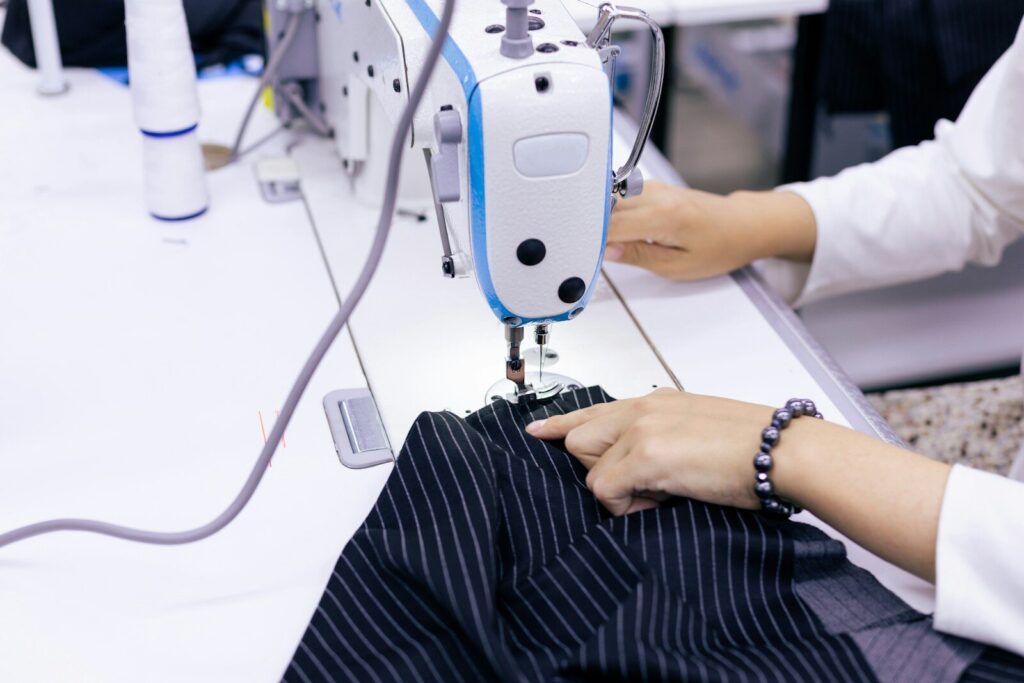
Picking the wrong production partner doesn’t just drain the budget, it compromises the product itself. For brands where construction, fit, and material quality are non-negotiable, the pool of premium clothing manufacturers for high-end garment production worth actually working with is smaller than most people realize. These five Los Angeles-based manufacturers span different specializations, MOQs, and service models, so which one fits a given brand is a genuinely meaningful distinction.
Where luxury brands source their production
Most established fashion labels and serious independent brands land on domestic US manufacturing for the same reasons: faster communication, tighter inspections, and the ability to work through development problems without a 12-hour time difference in the way. Los Angeles has built a dense production ecosystem (skilled patternmakers, specialized cut-and-sew facilities, and fabric suppliers are concentrated in a way that makes the Arts District and surrounding neighborhoods a practical home for high-end apparel work).
The five manufacturers below all operate in or near LA. Each one approaches production differently, and the right fit depends on where a brand is in its development, what it’s building, and how much hands-on support it needs.
1. The Evans Group
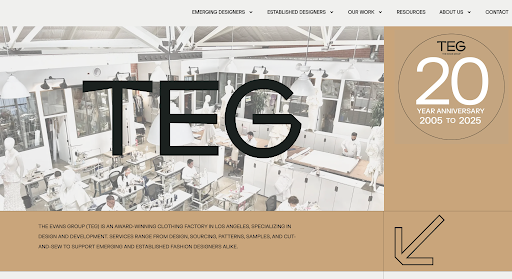
The Evans Group (TEG) is a vertically integrated apparel development and manufacturing operation in the Arts District of downtown Los Angeles, founded in 2005 by Jennifer Evans. Since then, TEG has developed nearly 4,000 designer brands, with published work tied to Rodarte, Nike, Guess, Jonathan Simkhai, and Banana Republic.
Use case: Apparel founders and established brands that need hands-on development support and care about the quality of the finished garment, especially those working with complex fabrics, detailed construction, or premium materials.
Features:
- Master patternmakers and dedicated sewing teams stay with a project from sampling through production
- Experience with delicate silks, leather, beading, complex knits, couture, and bridal finishing
- In-process quality checkpoints plus third-party final inspection before delivery
- Domestic production starting at 10 pieces per style (studio level); international production available for larger programs
- Design, fabric sourcing, pattern making, sample development, and cut-and-sew production under one roof; standard domestic turnaround runs 4 to 8 weeks
2. in LA Apparel
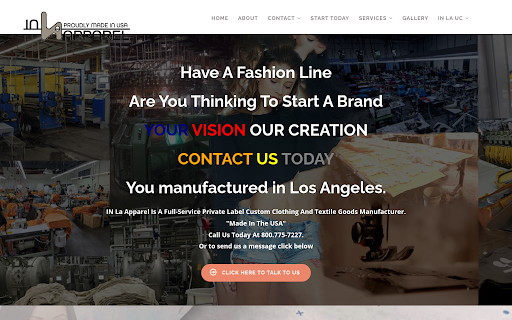
In LA Apparel is a full-service private label custom clothing and textile goods manufacturer based in Los Angeles and Orange County, California. The company operates as a vertically integrated cut-and-sew manufacturer with remote offices across the US, positioning itself as a single source for brands that need multiple production services coordinated in one place.
Use case: Brands looking for a one-stop manufacturing setup with organic capabilities, from early sample development through volume production and fulfillment.
Features:
- Services span sample development, low MOQ production, volume manufacturing, knitting, cut and sew, fabric and garment dyeing, decorating, re-labeling, packaging, and fulfillment
- Organic zone capabilities allow for 100% organic apparel production with current fashion designs
- Vertically integrated structure handles the full production chain rather than outsourcing individual steps
Considerations:
- Founded date and years in operation are not publicly documented, making it harder to verify long-term track record
- Pricing details are not published; brands will need to contact the company directly for quotes
- The “one-stop” model works well for brands that want consolidation, but those needing deep development support may want to confirm the depth of patternmaking services before committing
3. Apparel Factory
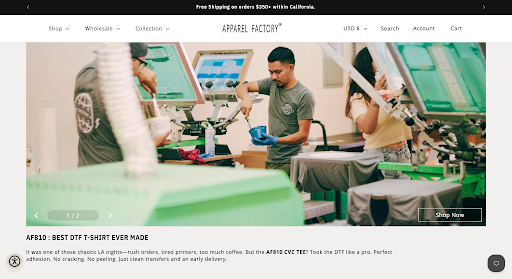
Apparel Factory is a premium blank and custom apparel manufacturer located at 226 W 37th Place in Los Angeles. The company handles the full production sequence in-house: pattern design by size and spec, fabric sourcing from vetted suppliers, cutting, printing or embroidery application, sewing, and final quality inspection.
Use case: Corporate clients and brands that need custom workwear, embroidered or digitally printed uniforms, and bulk custom orders with a clear production process.
Features:
- Full in-house production sequence from pattern design through fabric sourcing, cutting, decorating, sewing, and final inspection
- Offers wholesale blank apparel alongside fully custom production, covering categories including T-shirts, polos, tanks, sweatshirts, and more
- Accommodates embroidery, digital printing, and special requests on bulk orders of 100 or more items
- Corporate workwear focus makes it a practical option for branded uniform programs
Considerations:
- The minimum order quantity of 100 or more units for custom work rules it out for small-batch or early-stage brand launches
- The range skews toward workwear and basics; brands building premium fashion lines or complex technical garments may find the specialization narrow
- No founding year, client list, or independent reviews are publicly documented in available sources
4. Bella + Canvas
Bella + Canvas was founded in 1992 by Danny Harris and Marco DeGeorge and is headquartered in Beverly Hills, California. The company is among the largest wholesale blank apparel manufacturers in the US, and in June 2026 completed its acquisition by SanMar Corporation while continuing to operate as an independent brand under Executive Vice President Megan Spire.
Use case: Decorators, promotional distributors, and brands that need consistently high-quality blank garments at scale, particularly those building print-on-demand or branded basics programs.
Features:
- Garments are designed, dyed, and cut at the Los Angeles headquarters with near-zero waste
- Solar-powered and paperless warehouses; dye machines use 7 times less water than the industry average
- More than 25 years of experience in wholesale apparel, with a reputation built on fit, feel, and finish in blank styles
- Supplies blank garments to decorators and brands across the US and internationally
Considerations:
- Bella + Canvas produces blank garments for decoration; it’s not a development or private label manufacturing partner for original designs
- The SanMar acquisition introduces potential changes to operations and brand priorities that aren’t fully settled yet
- Brands needing pattern making, sample development, or custom construction work will need to find those services elsewhere
5. Essentials Made
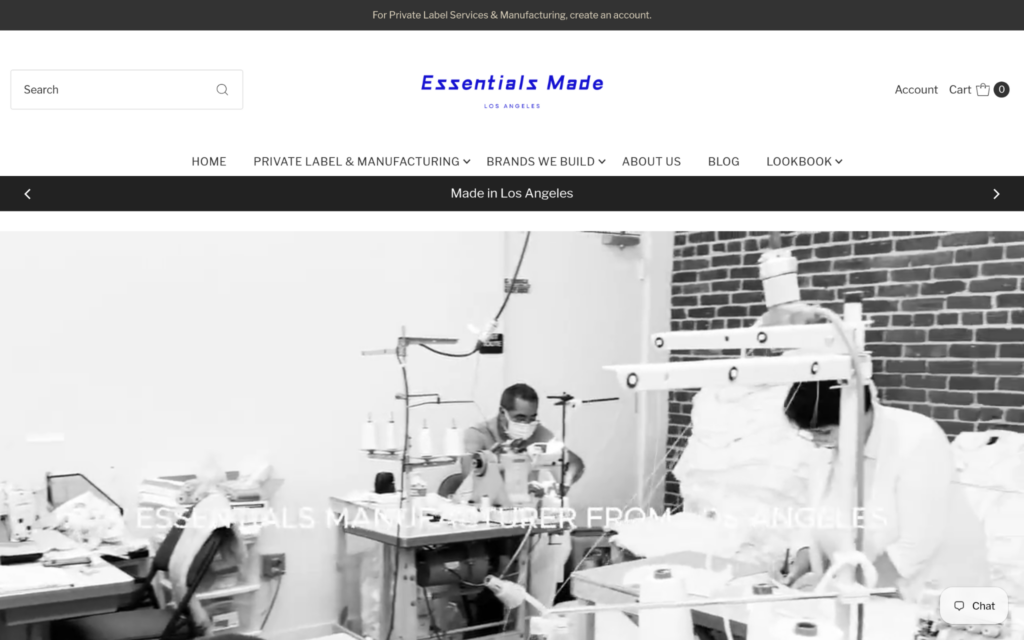
Essentials Made is a Los Angeles clothing manufacturer in the Arts District, located at 1330 S Santa Fe Ave. The company specializes in custom 100% cotton, garment-dyed essentials and elevated loungewear, all made to order in Los Angeles without using blanks or stock garments.
Use case: Independent brands, DTC creators, and premium labels building cotton-forward collections – hoodies, crewnecks, sweatpants, matching sets, tees, cotton activewear, and kids or toddler collections – with a focus on garment-dyed finishes and ethical local production.
Features:
- All textiles sourced from local mills; every piece uses 100% cotton with garment-dyed finishes in any Pantone TCX color
- Enzyme and silicone washing after dyeing produces a soft, broken-in feel and retail-ready finish
- Samples ready in approximately 2 weeks; production runs finish in 4 to 5 weeks
- Works exclusively with SB62-compliant partners for fair labor and consistent quality
- Named clients include Show Me Your Mumu, Kiloh and Co., Jacki Grace, and Renwick Sport
Considerations:
- The specialization in 100% cotton garment-dyed styles means the range doesn’t extend to technical fabrics, wovens, or complex construction
- Brands working outside the essentials and loungewear category will likely find the offering too narrow
- No pricing is published publicly; production costs are available on inquiry
What to look for in a high-end garment manufacturer
Several things separate a manufacturer worth trusting from one that’ll cause headaches mid-production. Where inspections sit in the process matters enormously, not just a final check at the end, but structured checkpoints woven throughout the build. You can fix errors caught during sewing. Errors caught after delivery can’t.
Second, match the manufacturer’s specialization to what you’re making. A company built around garment-dyed cotton basics and a company experienced with silk, lace, and bridal construction are solving different problems. The wrong fit wastes development time and often money.
And third, think about where the development work happens. Some manufacturers handle pattern making and sample development in-house. Others expect a brand to arrive with production-ready tech packs. Knowing which model applies before signing a contract saves a lot of friction later. Brands new to production especially benefit from working with premium clothing manufacturers for high-end garment production that keep development and manufacturing under one roof.
Bottom Line
The five manufacturers listed here serve meaningfully different corners of the market. Bella + Canvas is best suited to blank-garment programs running at scale. Apparel Factory handles corporate custom orders and branded workwear well. In LA Apparel fits brands that want organic capabilities alongside a consolidated production and fulfillment setup. Essentials Made is built specifically for cotton-forward, garment-dyed collections that need fast domestic turnaround. For brands that need a development partner as much as a manufacturer – especially those building premium clothing manufacturers for high-end garment production relationships around complex fabrics or detailed construction – a full-service operation with experienced patternmakers and in-process inspections will typically outperform a production-only facility. The right match depends on where the brand stands, what it’s building, and how much technical support it requires along the way.