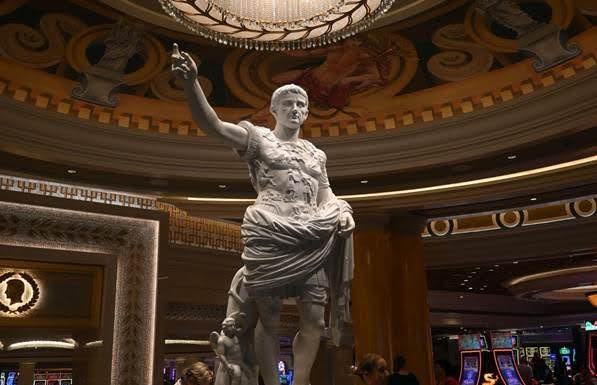
Casinos are built to feel frictionless; money becomes motion, and the room does most of the persuading. On screen, that design turns into story fuel… bright tables beside muted surveillance.
Over the last 30 years, film and television have used casinos as more than glamour shots. The sharper depictions show how the place works, who keeps it running, and what happens when confidence collides with probability.
The 1990s Reset and the Casino as a Modern Workplace
In the late 1990s, casino stories drifted away from old mob mythology and toward something colder and procedural. The casino became a workplace with policies, cameras, and a culture that looked relaxed while staying tightly controlled.
Paul Thomas Anderson’s Hard Eight (1996) stays close to the small rituals; the quiet guidance of a veteran gambler, and the way a casino can absorb people without raising its voice. It is not a tour of spectacle, it is a study of routines and thresholds.
By the time films like Croupier (1998) arrived, the floor was being framed as a site of labour as much as temptation; chips still glittered, but the job did not.
Croupier (1998): The dealer ’s-eye view
Croupier, directed by Mike Hodges and released in 1998, keeps returning to the hands, the cuts, the patter, and the controlled boredom. The casino is loud, but the work is repetitive, and the repetition is the point.
The film’s most lasting contribution is its emotional temperature. It treats the house edge as a mood, not a statistic, and it shows how quickly the glamour can flatten into routine when someone is paid to keep the game moving.
Ocean’s Eleven (2001): Heist glamour and the casino as architecture
Ocean’s Eleven (2001) makes the modern casino look like a brand that happens to contain games. Glass, marble, uniforms, and lighting do as much narrative work as dialogue; the property is a stage, and the customers are part of the choreography.
The depiction is knowingly artificial, yet it is precise about one thing: the casino is a system of flows. People are guided where to stand, when to look, and what to notice, and the building does it with a smile.
That glossy logic carried into later capers and comedies, including The Hangover (2009), where the Strip becomes both postcard and trapdoor. The jokes land because the setting sells freedom, only to snap it back.
Across these stories, the casino reads as a controlled environment dressed up as spontaneity. The set design becomes subtext, an expensive promise that everything is under control, until it is not.
21 (2008): Surveillance, advantage play, and the house noticing back
Films that focus on advantage play tend to pull the camera toward surveillance. In 21 (2008), card counting is framed as a team operation with consequences, and the casino’s response is depicted through scrutiny, identification, and the soft violence of being refused.
More recently, The Card Counter (2021) uses the casino as a site of repetition and numbness. Director Paul Schrader described slot play as “It’s kind of zombie-like,” a short line that matches the film’s view of the floor as routine disguised as hope.
Rounders, Casino Royale, and Molly’s Game: Poker on screen, from subculture to global ritual
Rounders (1998) arrived before poker’s televised boom, yet it became a reference point because it treated the game as a language. The rooms are romanticised, but the talk stays practical, and the stakes feel personal.
In a 2023 interview with PokerNews marking the film’s anniversary, director John Dahl described the challenge of making the game legible, calling it “a pretty obscure game at the time” and saying the film tried to “teach them what was at stake.” The line captures what Rounders does best, it invites the audience into a specialist world without sanding away its slang.
Casino Royale (2006) turns poker into diplomacy. The table becomes a negotiation space, and the tension sits in the pauses, the glances, and the way chips stand in for leverage. Director Martin Campbell later said, “Everybody was terribly worried that people would be bored with it,” an admission that underscores how unusual it was to build a blockbuster set piece around watching people think.
Molly’s Game (2017) shifts the poker story again, away from public casino floors and toward private rooms, where access is the real currency. The depiction is less about the mechanics of hands and more about the economics of invitation, who gets a seat, who pays for the myth, and who is allowed to leave.
Taken together, these poker portrayals map a movement, from underground identity to mainstream ritual, then to something more corporate; a performance that travels easily across cities and industries. Today, the same culture exists online as well, where players move between platforms, exploring everything from established operators to platforms offering free deposit spins that promise easier entry into the same rituals of risk and reward.
When the casino becomes panic, comedy, and compulsion
Not every influential depiction is careful, but some are honest about sensation. The Hangover uses casino space as a pressure valve, a place where consequences are delayed just long enough to become funny, then sudden.
Uncut Gems (2019) is not set on a casino floor, yet it belongs in this conversation because it captures gambling’s rhythm, the breathless optimism, the bargaining, the way risk can turn into identity. Its version of the gambling world is loud, transactional, and always on the verge of collapse.
These stories treat the casino not as a location, but as a feeling. A loop. A promise that one more turn will fix everything, even when the characters know better.
Television’s long view, with the casino as a civic machine
Long-form television has had room to treat casinos as infrastructure. The NBC series Las Vegas, which began in 2003, built weekly plots around security work and guest drama, while also framing the casino as a story engine. Creator Gary Scott Thompson summed up the premise in one line, “everybody’s got a story,” describing a city with “127,000” hotel rooms and therefore endless human plots.
Ozark, which began in 2017, pushes the idea into crime economics. Its casino story is about legitimacy, paperwork, lobbying, and public performance, the casino as a civic project that can be sold, regulated, and quietly exploited.
The End
The best casino depictions of the last 30 years avoid treating casinos as pure fantasy or pure vice. They show the building as a designed environment, with staff, security, branding, and rituals that keep people moving.
Across genres, the most convincing portrayals return to the same tension; the casino sells spontaneity while running on control.