
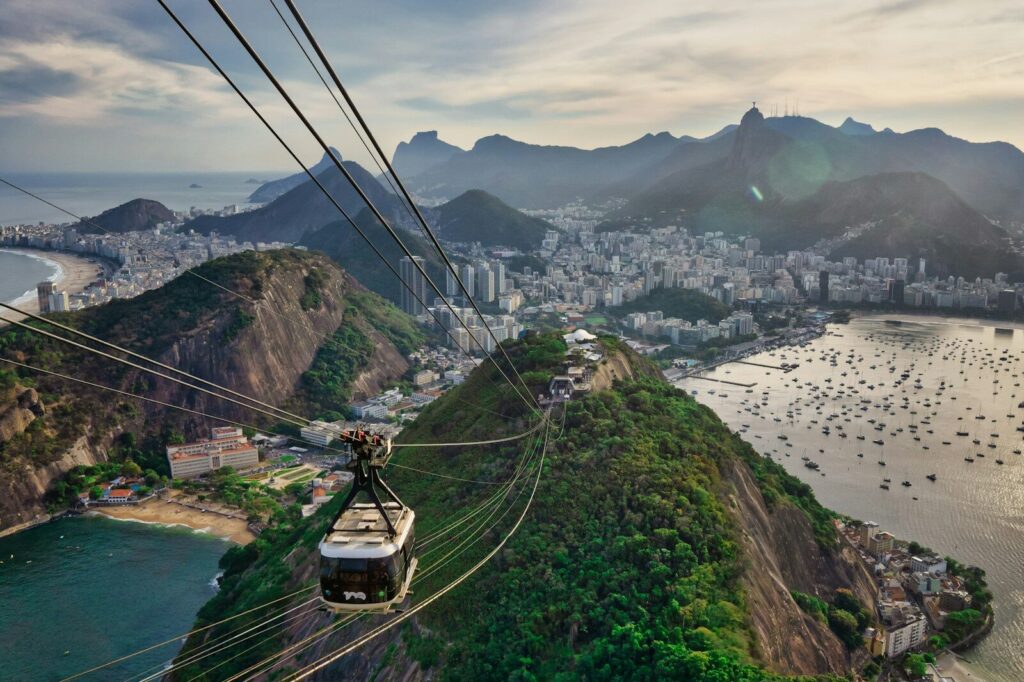
Brazil’s coastline gets most of the attention, and for good reason. But reducing the country to its beaches misses an enormous part of what makes it worth visiting. Beyond the sand and surf lies a landscape of rainforests, canyons, colonial towns, and sprawling wetlands that most international visitors never explore. For those ready to look further inland, Brazil rewards the effort many times over.
Travelling away from the coast does require a bit more planning. Distances between destinations are vast, public transport options can be limited in rural areas, and reliable Wi-Fi thins out quickly beyond major cities. Picking up an Holafly eSIM for Brazil before departure keeps navigation and real-time transport updates running smoothly, particularly in regions where finding a connection on the ground is not always straightforward.
With some preparation sorted, here are the places that make a compelling case for turning away from the shoreline.
Chapada Diamantina, Bahia
Tucked into the interior of Bahia state, Chapada Diamantina is a national park built around dramatic tabletop mountains, underground caves, and waterfalls that drop into vivid blue pools. The town of Lençóis serves as the main gateway and has enough infrastructure to support a few days of exploration without feeling overly touristy.
Hiking is the main draw here. Trails range from gentle half-day walks to multi-day treks through the valleys and plateaus. Cachoeira da Fumaça, one of the tallest waterfalls in Brazil, is a popular route but rarely feels crowded compared to more famous natural attractions along the coast. For visitors who enjoy landscapes shaped by geology, this region is difficult to beat.
The Pantanal, Mato Grosso do Sul
The Pantanal is the world’s largest tropical wetland, and yet it sits far below the Amazon in terms of international recognition. That relative obscurity works in its favour. Wildlife viewing here is arguably better than anywhere else in South America, thanks to open landscapes that make animals far easier to spot than in dense jungle.
Caimans, capybaras, jabiru storks, and jaguars all inhabit the region, and guided boat or jeep excursions offer close encounters that feel genuinely wild rather than staged. The dry season, roughly May to September, concentrates animals around remaining water sources and provides the best conditions for exploration. It is not a quick detour, but a few days in the Pantanal shifts the entire perception of what Brazilian nature looks like.
Ouro Preto, Minas Gerais
For a change of pace entirely, Ouro Preto offers a deep dive into Brazil’s colonial past. This hillside town in Minas Gerais was once the centre of the country’s gold rush, and the wealth of that era is still visible in its baroque churches, cobblestone streets, and ornate public buildings.
Walking through the town feels like stepping into a different century. The surrounding hills provide sweeping views over terracotta rooftops, and the architecture remains remarkably well preserved. Ouro Preto also sits within easy reach of other historic towns in the region, making it a strong base for a few days of cultural exploration.
Jalapão, Tocantins
Jalapão is one of the least visited and most visually striking regions in the country. Located in Tocantins state, it is a landscape of golden sand dunes, fervedouros (natural springs with crystal-clear water that seem to push swimmers upward), and vast cerrado wilderness. The remoteness is part of the appeal, though it does mean that reaching the area typically requires a four-wheel-drive vehicle and some advance planning.
Visitor numbers remain low, which gives the area a sense of genuine discovery. It is the kind of destination that barely registers on the international travel radar but consistently ranks among the favourites of those who make the journey.
Manaus and the Amazon Basin
The Amazon needs no introduction, but Manaus, the largest city in the region, often surprises visitors who expect nothing more than a jumping-off point for jungle tours. The city itself has a fascinating history as a rubber boom-era outpost, with grand European-style buildings standing in contrast to the surrounding rainforest.
From Manaus, river excursions range from short day trips to multi-day stays at remote lodges. The Meeting of the Waters, where two tributaries of different colours flow side by side without mixing, is a natural spectacle best witnessed from a boat. A few days here add a layer to a Brazil trip that no beach, however beautiful, can replicate.
A Country Beyond the Coastline
Brazil’s interior asks for a little more effort and a willingness to venture off well-worn tourist paths. In return, it offers experiences that are distinctly different from the beach resort circuit and it’s safe in general. Whether it is hiking through ancient rock formations, watching wildlife from a canoe at sunrise, or wandering through a colonial town built on gold, the country’s depth only becomes apparent once the coastline is left behind.