For decades, employee recognition days followed a familiar corporate formula: a catered lunch, a few speeches from senior executives, an awards presentation, and perhaps a performance intended to entertain the workforce. These gatherings were designed to express gratitude, strengthen company culture, and give employees a temporary break from their regular responsibilities. While the intention was generally positive, the execution often left employees feeling like spectators at an event organized around management’s priorities rather than their own experiences. As workplace expectations have evolved, the limitations of this traditional approach have become increasingly apparent. Employees now encounter a wide variety of entertainment experiences outside the workplace, making predictable corporate celebrations less distinctive. Consequently, companies are reconsidering whether conventional appreciation events genuinely strengthen employee relationships or simply fulfill an annual obligation.
One of the biggest challenges with traditional recognition programs is their reliance on passive entertainment. Employees may enjoy a musical performance, guest speaker, or elaborate dinner, but these experiences do not necessarily encourage meaningful interaction among colleagues. In large organizations, employees often spend the entire event sitting with people they already know, limiting opportunities to develop relationships across departments. Formal recognition ceremonies can also unintentionally create divisions between employees receiving awards and those whose contributions remain less visible. Even when the event is professionally organized, its emotional impact may disappear once everyone returns to their desks. This has prompted employers to question whether entertainment should serve as the centerpiece of recognition or as a vehicle for building stronger workplace connections.
Changing employee expectations are also influencing how organizations evaluate recognition events. Workers increasingly distinguish between appreciation that feels authentic and gestures that appear disconnected from their everyday experiences. An expensive celebration can generate skepticism when employees believe their concerns about workloads, communication, or advancement have not been addressed. At the same time, employers recognize that workplace gatherings remain valuable opportunities to acknowledge achievements and bring people together. The challenge is to design events that feel relevant without presenting entertainment as a substitute for meaningful organizational support. This changing perspective is pushing companies toward recognition experiences built around participation, personal connection, and a clearer understanding of what employees actually value.
Interactive Entertainment Is Replacing the Passive Audience Experience
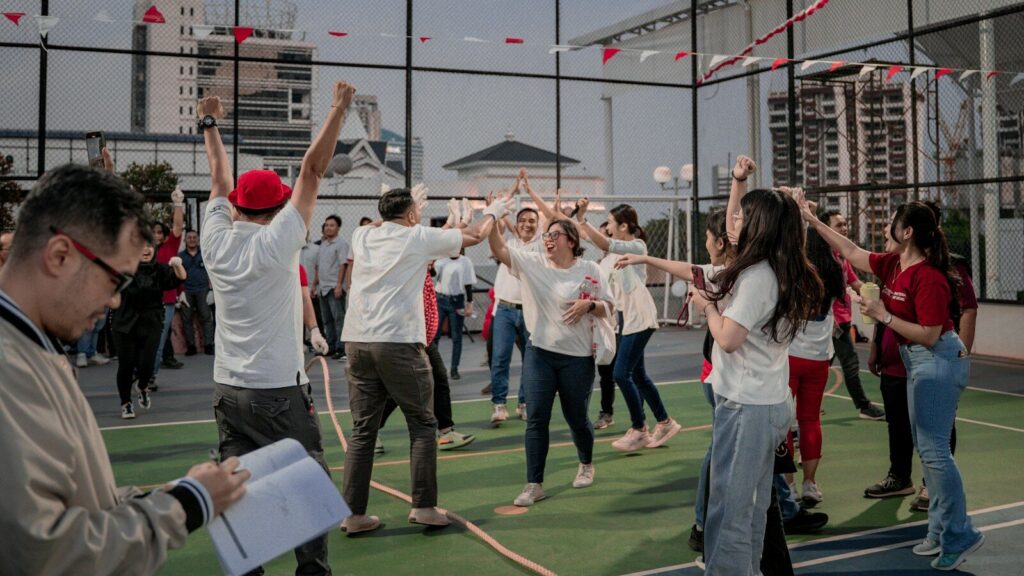
A significant change in corporate entertainment planning is the growing interest in activities that allow employees to participate rather than simply observe. Instead of filling an auditorium for a lengthy presentation, organizations are exploring environments where employees can move between activities, interact with colleagues, and choose how they spend their time. Interactive games, creative challenges, collaborative experiences, and festival-style attractions offer alternatives to traditional stage-centered entertainment. These formats can make recognition events feel less formal and more accessible to employees with different interests and personalities. They also create opportunities for spontaneous conversations that rarely emerge during structured company meetings. For employers seeking to improve workplace relationships, the social dimension of entertainment is becoming as important as the entertainment itself.
Turning interactive entertainment into a successful corporate event takes more than adding games to the agenda. Planners must consider different personalities, encourage genuine participation, and make room for informal connections. That has opened the door to creative providers such as Something New, which designs carnival-inspired games and customized experiences for workplace gatherings. Its approach to corporate entertainment uses interactive attractions to help colleagues connect beyond their usual teams. The company’s appreciation day activities offer another way to introduce playful challenges into celebrations without relying solely on speeches or performances. These formats give employees flexibility to join a game, cheer on coworkers, or simply enjoy the atmosphere. Just as importantly, thoughtful activity design includes quieter participants who may prefer less competitive social interactions. For companies rethinking recognition days, the appeal lies in creating shared experiences that feel engaging rather than obligatory.
Another important consideration is how interactive entertainment accommodates the different personalities, preferences, and comfort levels within a workforce. Some employees enjoy competitive challenges, while others prefer creative activities, casual conversation, or opportunities to observe before joining in. A thoughtfully designed recognition day can offer several forms of participation without making any one activity mandatory. This flexibility matters because workplace populations rarely share identical preferences for entertainment, competition, or group interaction. Employees who would hesitate to take part in a formal team-building exercise may feel more comfortable trying a short game or collaborative activity in an informal setting. When entertainment offers employees genuine choices, the event can become more welcoming and memorable without requiring everyone to participate in precisely the same way.
Employee Appreciation Is Becoming More Personal and Experience-Driven
Modern recognition strategies are increasingly shaped by the understanding that employees do not experience appreciation in identical ways. Some workers value public acknowledgment, while others prefer a private conversation with a supervisor or an opportunity to celebrate alongside their immediate team. A standardized recognition program can overlook these differences, especially when it relies heavily on awards, formal announcements, and highly visible individual achievements. Companies are therefore exploring experiences that recognize employees as people with distinct preferences rather than treating the workforce as a uniform audience. This does not mean abandoning collective celebrations, but it does require greater sensitivity to the range of motivations within an organization. Entertainment can support this approach when it provides flexibility and allows employees to shape their own experiences.
Personalization can begin well before the recognition event itself. Employers can gather employee input about preferred activities, scheduling, food, accessibility, and the overall atmosphere of the celebration. The resulting feedback may reveal that employees want something substantially different from what management initially envisioned. A workforce that spends most of its time in individual technical tasks might welcome collaborative social experiences, while employees who routinely interact with customers may prefer a more relaxed environment. Organizations can also incorporate local cultural elements, employee interests, and company-specific traditions into the entertainment program. When workers recognize their own preferences reflected in the event, the celebration is more likely to feel like a genuine acknowledgment of their contributions.
The shift toward experience-driven recognition also reflects a growing awareness that meaningful memories often come from participation rather than material rewards alone. A gift card or branded item may have immediate practical value, but a shared activity can create a story that colleagues revisit long after the event has ended. A team that completes an unusual challenge together may develop a stronger sense of familiarity than it would through another routine departmental lunch. Such interactions cannot guarantee improved morale or performance, but they can create conditions that support social connection. Employers are increasingly interested in that potential because recognition is not only about rewarding past work, but also about reinforcing the relationships that sustain future collaboration. The strongest programs balance memorable experiences with tangible forms of appreciation, ensuring that entertainment complements rather than replaces meaningful rewards.
Hybrid Work Is Changing the Purpose of Corporate Celebrations
The expansion of hybrid and distributed work has added another dimension to employee recognition planning. When employees work in different locations or spend limited time together in person, social opportunities that once occurred naturally can become less frequent. Informal conversations between meetings, shared lunch breaks, and spontaneous workplace celebrations may no longer be part of everyone’s routine. This makes organized recognition events potentially more significant as opportunities to reconnect with colleagues and strengthen relationships across teams. For some workers, an employee appreciation day may be one of the few occasions when they interact face-to-face with people they regularly collaborate with online. As a result, companies are placing greater emphasis on the quality of these gatherings rather than simply their frequency.
However, distributed workforces also make it harder to organize celebrations that feel equally meaningful to everyone. A large event at company headquarters can unintentionally privilege employees who live nearby, while remote workers receive a less engaging digital alternative. Streaming speeches or performances may allow employees to observe the celebration without offering the same opportunities for participation and conversation. Organizations must therefore consider whether a single centralized event is the most appropriate model for recognition. Regional gatherings, smaller local celebrations, and coordinated activities across offices can sometimes provide a more balanced experience. Companies may also need to allocate resources specifically for remote employees so that appreciation does not depend on geographic proximity to senior leadership.
Designing effective recognition programs for hybrid teams requires a more deliberate approach to entertainment. Interactive digital experiences can help geographically separated employees participate, but they should be selected with the same care given to in-person activities. Online games, collaborative creative sessions, and facilitated group experiences may work better than asking remote employees to watch a celebration happening elsewhere. At the same time, organizations should avoid assuming that every employee wants another scheduled video call outside normal responsibilities. Flexible participation windows, local activities, and meaningful recognition delivered directly to employees can help address these concerns. The broader objective is to build a consistent sense of appreciation across the workforce while acknowledging that the format may need to differ by location and working arrangement.
Play Is Being Reconsidered as a Serious Element of Workplace Culture
Play has traditionally occupied an uncomfortable position in many corporate environments, particularly those that emphasize productivity, efficiency, and measurable performance. Recreational activities are sometimes viewed as distractions from serious business objectives or as superficial attempts to make the workplace appear more enjoyable. Yet companies are increasingly recognizing that informal interactions can serve purposes that structured meetings and formal training sessions do not. Playful activities can encourage employees to communicate outside their usual professional roles and engage with colleagues in unfamiliar ways. A friendly game may provide an easier starting point for conversation than a networking session explicitly designed to produce professional connections. This has made play an increasingly relevant consideration in the design of employee recognition experiences.
One important feature of playful entertainment is its ability to temporarily reduce the formality that shapes everyday workplace interactions. During normal operations, organizational hierarchies influence who speaks, who leads discussions, and how employees approach senior colleagues. A shared recreational activity can create a setting where those relationships feel less rigid, allowing people to interact more naturally. An executive and an entry-level employee may discover common interests while participating in a simple challenge, creating familiarity that might not develop through routine office contact. These moments do not erase workplace power differences, nor should employers assume that every employee will feel comfortable participating alongside management. Nevertheless, carefully structured activities can provide openings for conversations that are less constrained by formal roles.
The business value of play also depends on how it is introduced and managed. Activities that feel compulsory, excessively competitive, or designed to embarrass participants can undermine the positive atmosphere they are intended to create. Employers should distinguish between offering opportunities for enjoyment and pressuring workers to demonstrate enthusiasm on command. Well-designed games can provide multiple ways to participate, including cooperative tasks, individual challenges, and low-pressure experiences that reward curiosity rather than athletic ability or social confidence. Organizers should also consider how competition is framed so that losing a game does not become an uncomfortable public experience. When play is treated as an invitation rather than an obligation, it can become a useful component of workplace culture without compromising professional respect.
Companies Are Looking More Closely at the Return on Recognition Spending
Corporate recognition events compete for funding with other organizational priorities, including employee development, compensation, technology, and workplace improvements. As a result, executives and human resources leaders face increasing pressure to explain what an entertainment budget is expected to accomplish. The traditional measures of event success, such as attendance, catering quality, or general satisfaction, provide only a limited understanding of an event’s value. A well-attended celebration may generate positive feedback without having any lasting influence on employees’ perceptions of the organization. Conversely, a modest gathering may produce meaningful connections and appreciation despite lacking elaborate production elements. Employers are therefore beginning to assess recognition entertainment through a broader framework that includes employee experience, engagement, and alignment with organizational objectives.
Evaluating these outcomes requires realistic expectations about what an individual event can achieve. A recognition day cannot independently solve problems involving management quality, compensation, workload, or employee retention. It may, however, support a wider recognition strategy by creating opportunities for acknowledgment, strengthening interpersonal relationships, and reinforcing shared values. Companies can gather feedback about whether employees felt included, whether activities facilitated useful interactions, and whether the experience reflected their contributions. Follow-up surveys can also explore which elements participants found meaningful and which parts felt unnecessary or uncomfortable. While these findings cannot establish a direct causal connection between entertainment spending and business performance, they can guide future investment decisions and reduce the likelihood of repeating ineffective formats.
Budget allocation is another area where companies are reconsidering familiar assumptions. Large venue rentals, celebrity performers, elaborate staging, and extensive production requirements can consume substantial portions of an event budget. These expenses may be justified for certain occasions, but they do not automatically produce more meaningful employee experiences. Interactive activities, flexible entertainment stations, and smaller group experiences may offer alternatives that direct more resources toward actual participation. The objective is not necessarily to reduce spending, but to ensure that spending supports the intended purpose of recognition. Organizations that begin with clear goals and design the entertainment around those goals are better positioned to distinguish memorable investments from expensive distractions.
Inclusion and Accessibility Are Becoming Essential to Event Design
A recognition event cannot achieve its purpose if a meaningful portion of the workforce feels excluded from the experience. Employee populations include people with different physical abilities, sensory needs, cultural backgrounds, communication preferences, and comfort levels in social environments. Entertainment formats that assume everyone can stand for long periods, tolerate loud music, or participate in physically demanding activities may unintentionally limit participation. Similarly, celebrations built around alcohol, public performances, or intense competition may not appeal equally to all employees. Companies are becoming more attentive to these issues as inclusion moves from a general organizational commitment into the practical details of event planning. Entertainment choices now carry implications not only for enjoyment, but also for whether employees experience the occasion as genuinely welcoming.
Accessibility should influence the planning process from the earliest stages rather than being addressed after the entertainment has already been selected. Venue layouts, seating arrangements, transportation, lighting, sound levels, signage, and activity requirements all affect how comfortably employees can participate. Organizers can benefit from offering quieter spaces, accessible game formats, alternative participation methods, and clear descriptions of activities before the event. Employees with mobility limitations should be able to access entertainment areas without unnecessary barriers, while those with sensory sensitivities may appreciate environments that provide relief from noise and crowds. It is also important to avoid making employees disclose personal circumstances publicly to receive reasonable accommodations. By anticipating varied needs, employers can reduce the burden on individuals and create a celebration that feels more considerate for the entire workforce.
Inclusion also extends to the scheduling and financial realities of employee participation. Workers on evening shifts, hourly schedules, field assignments, or customer-facing roles may have fewer opportunities to attend recognition events organized during standard office hours. Employees with caregiving responsibilities can face additional obstacles when celebrations take place outside paid working time. Companies should consider whether attendance requires employees to sacrifice personal time, cover transportation expenses, or arrange childcare without support. Multiple event sessions, paid participation time, accessible locations, and equivalent recognition options can help create a more equitable experience. These considerations may appear operational, but they are closely connected to the central purpose of employee appreciation. An event communicates respect more convincingly when the organization demonstrates that every employee’s time and circumstances matter.
The Future of Employee Recognition Is About Connection, Not Spectacle
The changing approach to employee recognition reflects a broader reconsideration of what corporate celebrations are supposed to accomplish. Entertainment once functioned primarily as a reward provided by the organization, with employees expected to enjoy the experience and return to work feeling appreciated. Increasingly, employers are treating these events as opportunities to strengthen relationships, express company values, and create shared experiences that are difficult to reproduce through routine workplace communication. This shift changes the questions planners ask when selecting activities. Rather than focusing exclusively on which performer or attraction will make the biggest impression, they must consider what employees will do, how they will interact, and what the experience will communicate. A successful celebration may therefore be defined less by its scale than by the quality of participation it creates.
This does not mean that traditional entertainment formats are becoming irrelevant. Concerts, guest speakers, formal dinners, and awards ceremonies can still play valuable roles when they fit the workforce and the occasion. The distinction is that companies are becoming more selective about when these formats are appropriate and what additional experiences may be needed. A large organization might combine a formal recognition presentation with smaller interactive activities, while a growing business might prioritize an informal gathering that brings recently hired employees together. Other employers may choose geographically distributed celebrations that reflect the interests of regional teams. The most effective approach depends on the organization’s culture, employee preferences, available resources, and the specific achievements being recognized.
Ultimately, the evolution of employee recognition entertainment highlights a simple principle: appreciation becomes more credible when employees can see that thought has gone into their experience. A memorable event is not necessarily the one with the largest budget, the most elaborate production, or the longest entertainment schedule. It is the one that gives employees genuine opportunities to feel acknowledged, included, and connected to the people around them. Companies that treat entertainment as part of a broader culture of recognition are more likely to make thoughtful decisions about where and how to invest. Those that rely on spectacle without addressing everyday employee concerns risk creating celebrations that feel disconnected from workplace reality. As organizations continue to rethink recognition days, the most important change may be the movement away from entertaining employees as an audience and toward creating experiences in which they feel like valued participants.