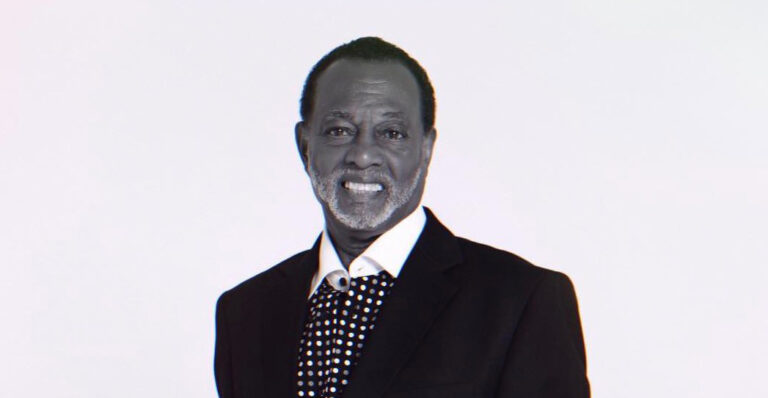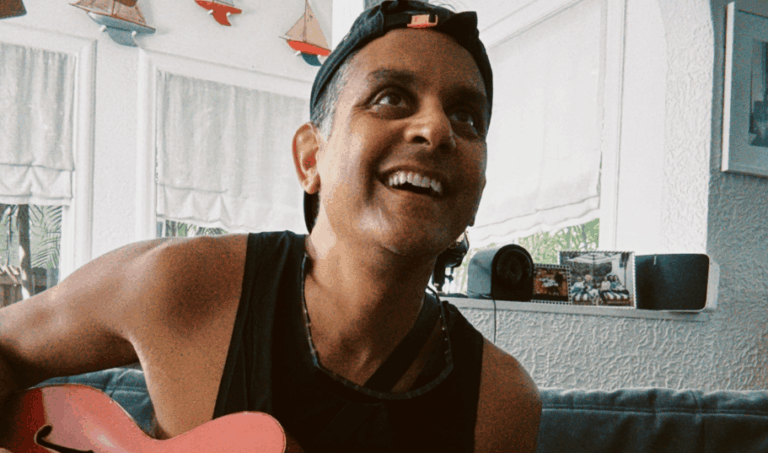
Los Angeles-based producer, multi-instrumentalist, and film composer Reza Safinia composes dance-floor bangers for the end of the world. Five years after his last albums, 2021’s paired releases Yin and Yang, the electronic artist now returns with 1/∞, a double album sequenced, in meticulous fashion, with each vinyl side serving to represent one of the four elements: fire, water, air, and earth.
Today, Safinia shares “Vapor,” an intense and sleek track driven by a pulsing beat and ominous underlying piano melody. As the song unfolds, it builds into a dark, dangerous atmosphere elevated by swelling strings and richly layered instrumentation.
Some relationships skip the liquid stage entirely — no depth, no flow, just the constant threat of evaporation. “Vapor” is Reza’s meditation on the exhausting choreography of cancel culture: the eggshell diplomacy, the performative navigation, the grief of connection that never gets to be real.
Built around the scientific phenomenon of sublimation — matter bypassing its fluid state and jumping straight to gas — the track translates that physics into something painfully human. When you can’t speak freely, can’t disagree openly, can’t love your neighbor without a liability clause, intimacy itself becomes impossible. You’re not in a relationship. You’re managing a pressure system.
The lyricism is as carefully constructed as the production. The song’s emotional gut-punch lands on a rhyme scheme so disguised it operates below conscious detection — way but, neighbor, vapor — four words strung across the melody whose shared trailing vowel only reveals itself once you’re already feeling the resolution. It’s not a rhyme you notice. It’s a rhyme you absorb. The kind of writing that makes a lyric feel inevitable without ever showing its work.
Sonically, “Vapor” moves the way the subject feels: a dark, pounding low end anchored by cracking snares and claps, a felted piano pressing through the murk, cellist Jac Hoja threading underneath like something unresolved, and falsetto vocals that land somewhere between Depeche Mode’s brooding electronic cool and the sensual, slippery funk of Prince — urgent and otherworldly, intimate and just out of reach. The tension between the track’s heaviness and its airiness is the point. Something is both everywhere and nowhere at once.
The accompanying video, co-directed by John Dill and Reza, deepens the disorientation. Shot in a palette that can’t quite decide what it is — almost black and white, but not quite, with cold blues and urgent reds bleeding through just enough to unsettle — it follows Reza as a cab driver on a mission through the interlocking freeways of downtown Los Angeles. He’s dressed for the dream: a bold polka dot shirt layered against a fine-dotted bow tie hanging loose around his neck, two scales of the same pattern in quiet tension with each other, cutting through the near-monochrome like a visual riddle. The camera drifts past gleaming high-rises, the Arts District’s graffiti-laced walls, and the steel geometry of bridges, before arriving at an abandoned phone booth at the edge of nowhere. He picks up the receiver. He sings. But who is on the other end? The dream folds back on itself — a loop, a man calling out to his own echo — equal parts Lost Highway noir and waking fever dream.
Sexy, hypnotic, and quietly furious, “Vapor” doesn’t rage against the machine. It drives past it — window up, on the superficial highway — because sometimes that’s the only move left.
“Vapor” is out May 13, 2026 via all DSPS.
REZA SAFINIA BIO:
Reza Safinia composes dancefloor bangers for the end of the world. As the long-trusted pillars of modern life crumble around him—far too literally, in the case of last year’s wildfires—Safinia sifts through the ash and uses it as fuel for mesmerizing songs that confront the intense polarities that shape the modern world.
Five years after his last albums, 2021’s paired releases Yin and Yang, the producer, multi-instrumentalist, and prolific film composer now returns with 1/∞, a double album sequenced, in meticulous fashion, with each vinyl side serving to represent one of the four elements: fire, water, air, and earth.
It’s Safinia’s most ambitious work yet, a sprawling song cycle that casts a probing eye on a litany of societal ills—addiction (“Wash U Off”), cancel culture (“Vapor”), sociopolitical boiling points (“Home to Roost”), war (“Watching from the Wings”), the myriad ways technology mediates intimacy (“I Feel U”)—without succumbing to cynicism, and without straying too far from the eternal groove. Harnessing his impressive facility with analog synths, club-ready beats, and mournful string arrangements, Safinia crafts complicated dance music that quivers and shakes to the rhythms of a society coming unglued.
“It’s definitely a concept album,” Safinia explains. “It’s really me processing my own emotions about what I have lived through for the last five years and my reflections on what the world has lived through. Acknowledging where we’ve gone wrong and where we are struggling, but also trying to find hope in where we can actually repair that and come together. Because life can be so beautiful, you know?”
Finding beauty in contradiction has been a lifelong project for Safinia. An Iranian-American composer with a passion for yoga and Eastern philosophies, Safinia has never fit into easy boxes. He draws inspiration as freely from Impressionist-era classical composers Debussy and Satie as he does from ’80s icons like Roxy Music and Depeche Mode. He spent his 20s performing in a short-lived pop group, which toured with Destiny’s Child in the early aughts, and later fell in love with electronic music after attending Burning Man. He’s as comfortable composing on a Steinway piano as he is at wrangling gnarly sounds out of a Moog Sub 37 synthesizer.
That versatility gave life to the songwriter’s last two albums—Yin was a neoclassical album written for piano and cello, Yang a high-octane electronic album—and helped Safinia become a sought-out composer in the world of film and TV. In recent years, he has scored renowned projects such as the HBO Max series Warrior and the Nicolas Cage movie The Trust.
But even as TV scores paid the bills, Safinia was regularly jotting down poems, observations, and sketches for songs. And he became more and more entranced by electronic music, finding ways to fuse techno rhythms and synthesizers with the classical music he had mastered earlier in life.
After the Burning Man trip, “It started making me start thinking about different ways of connecting that type of electronic music with the classical piano that I play,” Safinia says. “I was always busy as a composer in film and TV. But when Covid happened and the show I was working on, Warrior, was put on hold, it gave me an opportunity to actually experiment with all those things I’d been thinking about for about five years. And I just went all out with it.”
He recorded portions of the new album in Ibiza, where he spent time last summer, soaking up life in a sensual place and spending time with vastly different individuals, from barefoot hippies to decadent billionaires. Viewing these disparate worldviews up close informed his new songs; Safinia witnessed how, in a post-Covid world, the rich were getting richer and people were both growing profoundly disconnected and also finding magical connections together at the same time.
“I think that paradox is really what has driven me lately,” the musician reflects. One song he wrote, the kaleidoscopic reverie “Nightlife Lullaby,” burrowed deep into those differing strands of humanity. “I wrote it in a way that’s kind of Alice in Wonderland-ish,” Safinia says, “but it’s basically about the different variety of flora and fauna we live in and how we all relate to each other.” A darker track, “Home to Roost,” builds on the musician’s observations of inequality and a sense of looming commonplace for the privileged few: “And if you’re hiding in your bubble, thinking you’re OK,” he sings, “you might find yourself in trouble on Judgment Day.”
Back in Los Angeles, Safinia holed up in his home studio, toggled between his upright piano and his analog synthesizers, and wrote string parts for two cellists he recruited to perform on the record. The songs flowed out of him. They ranged from mind-melting dance-punk gems like “Kiss U on the Way,” which quivers and grooves like a vintage New Order banger, to more reflective, elegiac numbers like “Feel Like a Child” and “Hurt,” a meditation on a relationship between two people who can’t help but wound each other.
The eclecticism was core to the project—an attempt to show how artists can hybridize styles. “There’s room for one school of thought to take ideas from another school and mix it together,” Safinia muses.
Though his last two albums had been wordless, this time Safinia began writing poems expressing his thoughts on turmoil both personal and global. “There was just so much going on in the world,” the artist says. “I started writing stuff. And then the process of turning them into actual songs was interesting, because I decided not to change them too much, not to make them overly rhyme-y.”
That sense of potent immediacy ripples through the songs. When the wildfires raged through Los Angeles County, Safinia channeled that grief and disorientation into the songwriting, too. It’s there in the frenetic, throbbing synths of “Fire,” which roils in the frenzy of flames both real and internal—“I started as a flame/Now I’m on fire/Take a look around/The world is on fire,” the musician cries—as well as “Kiss U on the Way,” a more hopeful vision of good things rising from the embers that remain after a devastating fire. “The smoke from the embers are like whispers,” Safinia explains, “delicate and subtle that come back to kiss you somewhere else in your life.”
A subtler strain of societal decline animates “Nostalgia,” which pairs driving piano chords and floor-rattling synths with bittersweet laments for a vanished world. The singer muses on how things used to be so much simpler—“Back in the day, my wildest dream was attainable/Now even trivial things seem unsustainable”—but also wonders if looking at the past through the fog of nostalgia is a trap. Even if it is, people are hurting, which makes the song’s hopeful conclusion, “a delicate prayer/To see aliveness in eyes again,” potent and affecting.
Then, last March, the war with Iran triggered a flood of emotions and prompted the musician to write a last-minute addition to the album. The result was “Watching from the Wings,” an urgent plea for humanity amid escalating warfare and cruelty. “Revolution in the middle of the night/Hopes of generations/Screaming silently, hanging on/On the eve of desperation,” Safinia sings, alluding directly to the ongoing war, accompanied by pulsing beats and the melancholy swell of cellos.
Although “Watching from the Wings” was written in the shadow of the ongoing fight for freedom in Iran, its emotional core reaches back decades. Reza was a child when his family left: old enough to carry the memory of a threshold crossed, young enough to have no say in crossing it. “Watching from the Wings” excavates the guilt that lives in that gap—the feeling of watching a people’s suffering and sacrifice from the comfort of distance, wondering whether that distance disqualifies one from feeling anything at all.
“When this war broke out, it brought up a lot of memories for me,” Safinia says. “It also made me feel so much for the people of that country. And yet, at the same time, I feel like I don’t deserve to have feelings because they are suffering so much. And I’m not one of them anymore.” In the song’s final verses, Safinia movingly grapples with that specter of survivor’s guilt as he describes himself “watching from the wings, hovering in luxury.”
The production mirrors that tension deliberately. A driving dance kick and bass provide momentum—the pull of the present, the rhythm of a life built elsewhere—while a cello weaves through the track until it cuts out suddenly, leaving only the bare kick drum: a single heartbeat, exposed.
As 1/∞ unfurls, with a cinematic command of pacing, its songs also confront turmoil of a more romantic nature. The darkwave jam “Love Addict” reckons with compulsive intimacy as a kind of self-destructive vice: “In and out of love/Never time to be/In and out of love/Escaping all the demons.” Then there’s “I Feel U,” a dark and sensual club banger about seeking connection in an increasingly fractured and isolated world, and standout track “Stardusted Girl,” a falsetto-laced synth-pop anthem that buckles under the mood-altering rush of a relationship that’s as toxic as it is intoxicating.
“On the face of it, it’s a love song to a cosmic type of girl, someone I felt an instant soul connection with that transcended lifetimes,” Safinia explains. “But there was always something off in the connection. She made me weak; she made me nervous. Then it finally hit me: the purpose was to expose my weakness. To let myself feel it. To open an old wound and inquire into it, to find a way back to myself. And at the end of it, the stardusted girl is actually me.”
At the heart of 1/∞ is a plea for unity, a call for listeners—anyone, really—to recognize that they have far more in common than the fractured body politic tends to admit. The album title ties it all together—“one over infinity,” for the non-mathematicians at home, a representation of a theoretical approach to zero, and a manifestation of Safinia’s belief that, spiritually, we are all part of one consciousness.
That theme ripples through songs like “After All,” the double-LP’s recurring bookend, in which Safinia croons in falsetto: “Are we alone?/Are we left, are we right?/Are we red, are we blue?” The song goes on to muse that separation may be an illusion, that “there’s nothing to understand but to love.” (This concept also informs Safinia’s newly launched podcast, “1/∞ — Spiritual Arts Podcast,” which will feature reflections and conversations with fellow artists.)
“That’s really what this whole album is about,” the songwriter says. “It’s an expression of the fact that, ultimately, the only thing that makes sense to me after everything is love. It’s why we exist, literally. Even on the most micro level, love, or the desire to reach out to something else and connect with it, is the cause of why we exist in the universe. That’s an important theme of that song, and hence the whole album.”