Event organizers face a constant challenge: how do they get noticed in a crowded space? Two of the most popular tools for outdoor and indoor event marketing are inflatables and banners. Each option carries its own strengths, and the right choice often depends on specific goals, budget, and environment. This article breaks down both formats side by side, covering real-world performance, cost considerations, and practical usability. By the end, readers will have a clear picture of which format fits their next event best.
How Inflatables and Banners Stack Up as Event Marketing Tools
Not all marketing tools are created equal, and the gap between inflatables and banners becomes very clear at live events. Both formats serve the same general purpose: attract attention and communicate a brand message. But, the way they accomplish that goal differs significantly.
The Visual Impact of Inflatable Advertising at Events
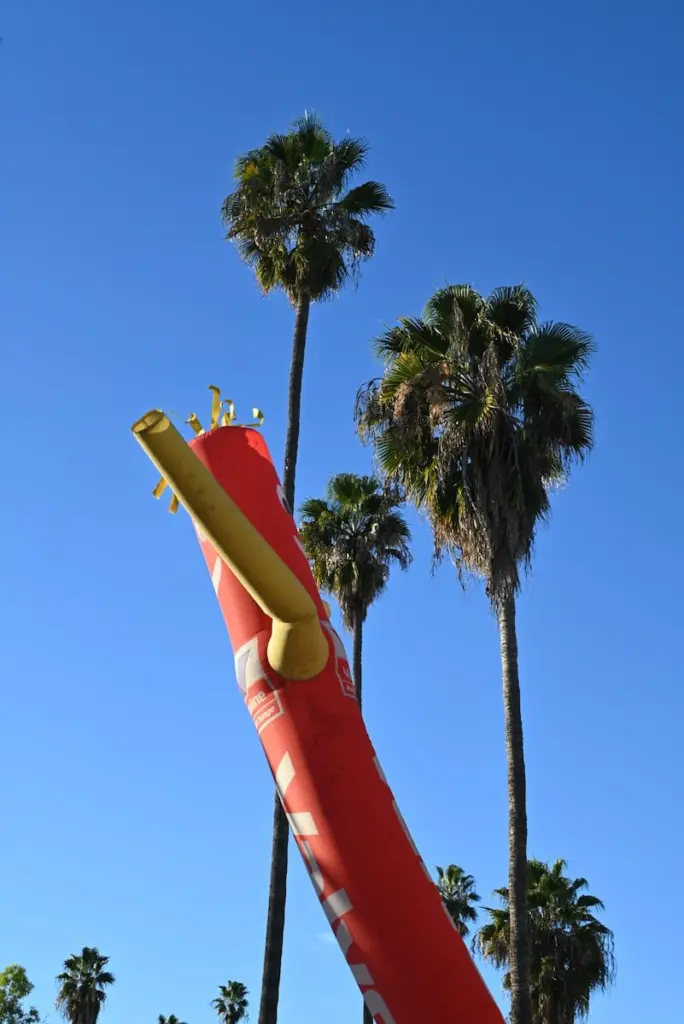
Inflatable advertising structures are designed to command attention across large event spaces. A towering inflatable logo, mascot, or product replica can often be spotted from hundreds of feet away, even in dense crowds. Compared with LED display panels or modular exhibition booth structures that rely mainly on screen content or wall space, Floatie Kings’ giant advertising inflatables or similar large-format installations tend to create a stronger spatial presence simply through height and shape.
Beyond their size, inflatables also introduce a novelty factor that encourages interaction. People are more likely to stop, take photos, and share those moments online, extending a brand’s visibility beyond the physical event space. A well-designed inflatable becomes more than signage—it becomes part of the overall event experience.
How Banners Perform as Traditional Event Signage
Banners have served as a go-to event tool for decades, and for good reason. They are straightforward to produce, quick to set up, and available in a wide range of sizes. Vinyl banners in particular hold up well outdoors, resist weather, and can display detailed graphics or text clearly. For events that need directional signage, sponsor recognition, or informational displays, banners remain a practical and budget-friendly solution.
That said, banners have real limitations in high-competition environments. At a trade show or festival where every vendor uses similar flat signage, a single banner struggles to rise above the visual noise. Attendees tend to scan past multiple banners quickly, especially in spaces where dozens of them line the same corridor or perimeter.
Which Format Captures Audience Attention More Effectively
Attention is the first currency of event marketing. Studies on visual cognition consistently show that three-dimensional objects attract attention faster than two-dimensional ones. This gives inflatables a structural advantage in open-air or large-venue settings. A banner placed near an inflatable will almost always lose the attention battle.
But, context matters. In smaller, more controlled spaces, such as conference rooms or indoor retail events, a large inflatable may not be practical. In those settings, a well-designed banner placed at eye level can perform just as effectively. The takeaway is that inflatables win on raw attention-grabbing power, but banners hold their own in environments where scale is limited.
Key Factors to Consider: Visibility, Cost, and Portability
Choosing between inflatables and banners involves more than visual preference. Event organizers need to weigh practical factors that affect both short-term execution and long-term return on investment.
Visibility Range and Brand Recognition at Scale
Visibility is often the deciding factor for outdoor events. Inflatables offer what banners simply cannot: height and volume. A standard banner tops out at a few feet tall, whereas a custom inflatable can rise 10, 15, or even 20 feet into the air. At a street fair, sporting event, or outdoor concert, that height difference translates directly into exposure. More people see the brand, and they see it from a much greater distance.
Brand recognition also benefits from the three-dimensional format. A replica of a product or logo rendered in inflatable form registers more memorably with attendees than the same image printed flat on vinyl. The physical presence of an inflatable reinforces brand identity in a way that lingers after the event.
Cost Comparison: Upfront Investment vs. Long-Term Value
Banners have a clear advantage in upfront cost. A quality vinyl banner can be produced for a fraction of what a custom inflatable costs. For organizations with tight budgets or single-use event needs, banners offer a sensible solution without a large financial commitment.
Custom inflatables require a higher initial investment, but they are built to last. A well-constructed inflatable can be reused across dozens of events over multiple years. For brands that attend events frequently, the cost-per-use of an inflatable drops considerably over time, often making it the more economical choice in the long run. The calculation shifts from “what does it cost today?” to “what does it cost per event over three years?”
Portability, Setup, and Storage for Event Teams
One area where banners hold a clear advantage is portability. They fold or roll flat, fit into compact carry bags, and require almost no setup time. A small team can hang or stand a banner in minutes with minimal equipment. This makes banners ideal for teams that travel frequently or operate with limited staff.
Inflatables require a blower motor to stay inflated, and setup takes longer, typically 10 to 30 minutes depending on the size. Storage also requires more space, as inflatables need to be packed carefully to avoid damage. For teams that prioritize speed and simplicity, this is a real consideration. But, for events where maximum visibility matters more than setup convenience, the extra effort of an inflatable pays off clearly.
Conclusion
Both inflatables and banners serve legitimate roles in event marketing, but they are not interchangeable. Banners work well for tight budgets, indoor settings, and informational displays. Inflatables deliver superior visibility, stronger brand recall, and greater long-term value for brands that compete in high-traffic outdoor environments. The right choice depends on the event type, available budget, and the level of visibility a brand needs to achieve its goals.