Music
How Independent Artists Can Make Professional Music Videos on a Small Budget in 2026

02 Jul
You finished the song months ago. It’s mixed, it’s mastered, three friends have sworn it’s the best thing you’ve done, and somewhere along the line you decided it needed a video. Then you looked up what a video costs and quietly closed the tab.
Here’s the part nobody says loudly enough. The expensive version and the version you could shoot this weekend aren’t that far apart anymore. A current phone captures cleaner footage than the cameras pro crews were renting ten years ago. Editing software that used to run a grand is free. What’s left over is the thing money never bought in the first place: a real idea, plus the patience to film it properly. Cheap doesn’t have to look cheap, and the way you get there is mostly about choices, not cash.
What You’re Really Paying For
Forget the figures you’ve seen. Big-label videos start around $20,000 and climb past half a million for the ones with helicopters in them, and that range is exactly why so many independent musicians assume a video is off the table. It isn’t. The realistic music video production cost for someone putting out music on their own runs from literally zero to maybe a few hundred bucks, and most of that comes down to how many friends owe you a favor.
And the budget really isn’t the deciding factor. OK Go shot the treadmill clip for “Here It Goes Again” for somewhere near $4,000. It won a Grammy. It’s been watched tens of millions of times on YouTube. The whole thing is four guys in a room with gym equipment. Spend on what the song needs, skip the rest.
How to Make a Music Video Without a Crew or a Catering Budget
Most of figuring out how to make a music video on a budget comes down to a single decision: pick a concept that fits what you’ve already got, instead of dreaming up something you’ll spend the whole shoot faking.
A few formats reliably do a lot with almost nothing. The single-location performance is the safe bet. One room, one rooftop, one stretch of underpass, filmed for the length of the track. A single strong spot reads better than five weak ones, and you lose the travel days. Its show-off cousin is the one-take video. Hit record, play the whole song through, no cuts. That one can look incredible, and it can also collapse on take 19, so rehearse it like choreography.
Don’t want your face in it? The lyric video and the photo montage are the cheapest way in. Loads of people first work out how to make a video with music using nothing more than a folder of photos, a stack of typed-out lyrics, and a beat to cut against. Then there’s the AI route, which got good in a hurry. Feed a track to a generator and it’ll hand back beat-synced visuals, or build an animated visualizer straight off the waveform.
Whatever you land on, sketch it before you shoot. Ten minutes of stick-figure storyboarding and a quick shot list will surface the problems your excitement is currently hiding from you. Keep the crew tiny, too. You’re going to be the director, lighting person, and the one on camera, and three people move quicker than ten.
The Gear, the Apps, and Where the Money Goes
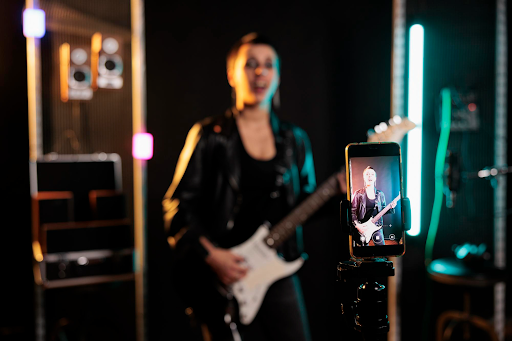
Your starter kit is cheap, and you probably own most of it. A phone with a recent camera. A twenty-dollar tripod. One small LED panel. A Bluetooth speaker loud enough to blast the track on set so you can perform to it rather than mime in dead silence. Film in the hour after sunrise or before sunset, and the light handles half your job for free.
Then comes editing, which is where beginners tend to freeze for no real reason. DaVinci Resolve and iMovie are free and good enough to finish a video people will sit through to the end. If you’d rather work in a plain drag-and-drop timeline, Movavi Video Editor is an easy starting point for a first-timer. It has beat detection that drops markers right on the rhythm so your cuts land on the snare, and background removal that skips the green screen entirely.
Pick whichever one you’ll see a project through in, because the slickest editor on the planet does nothing for a video you abandon halfway. If a feature stumps you, there’s a YouTube tutorial for basically every button in every one of these apps.
If you come up short on footage, AI clip generators and royalty-free stock can patch the holes. Read the license before you add any of it, though, so a copyright claim doesn’t yank the whole thing offline a month later.
The Stuff That Separates Watchable From Rough
A handful of small habits, none of them costing a cent, are what make a cheap video look deliberate. Top of that list: use your final audio file. Not a rough mix, not a phone memo. The edit lives or dies on timing, and the moment you re-export the song with a two-second-longer intro after you’ve already cut, your whole sync slides sideways. Lock the audio first.
On camera, sing along out loud to the track coming off your speaker. Miming to silence looks stiff, and singing gives you cleaner mouth-sync to work with afterward. Run the full song at least three times: a steady front angle, a tight close-up for the parts that hurt, and one handheld pass with a friend moving alongside you. Full takes bail you out when one angle has a blink, a focus hunt, or a stranger wandering through the back of the shot.
Mind your sound on location, as well. A ten-dollar clip-on mic, or even a cheap fuzzy windscreen, rescues an outdoor shoot that wind would otherwise flatten. And if the picture still looks washed out once it’s all cut together, a light color grade does more than any lens you can’t afford. One of those tips worth writing on your hand: get the dull stuff right, and the interesting stuff mostly takes care of itself.
Small Acts Who Pulled It Off
The best evidence that you don’t need money is the people who never had any. Vulfpeck, the funk band, shoot and edit nearly all their own videos in-house, so each one costs roughly a weekend and a pizza, and the homemade feel is half of why fans love them. Matt and Kim built the “Daylight” video out of, more or less, the two of them clowning around their own neighborhood. Kiesza filmed “Hideaway” in one unbroken take down a Brooklyn street on a shoestring, and it flipped a singer nobody had heard of into a name inside a week.
None of them leaned on a big crew. They leaned on a clear idea and the nerve to commit to it with a camera running, which happens to be the one thing in this whole article that costs you nothing.
Now Get People to Watch It
A video nobody finds does nothing for you as an artist, so plan the rollout before you’ve even finished editing. Park the full cut on YouTube as its permanent home. Carve vertical 9:16 clips out of it for TikTok and Reels. Pull a few behind-the-scenes pictures and a ten-second teaser video to promote the drop across your socials in the days before it lands. Export a couple of aspect ratios up front so you’re never re-cutting for a new platform later.
That’s the whole playbook. Cheap gear, one idea worth filming, a couple of free weekends, and the willingness to point a camera at something true. Plenty of working artists had nothing more than that when they started out, and a few of them you’ve definitely got in your library.