Whats Trending
OPPO Find X9 Ultra: Mastering the Soul of Malaysia with Hasselblad Precision

06 Jul
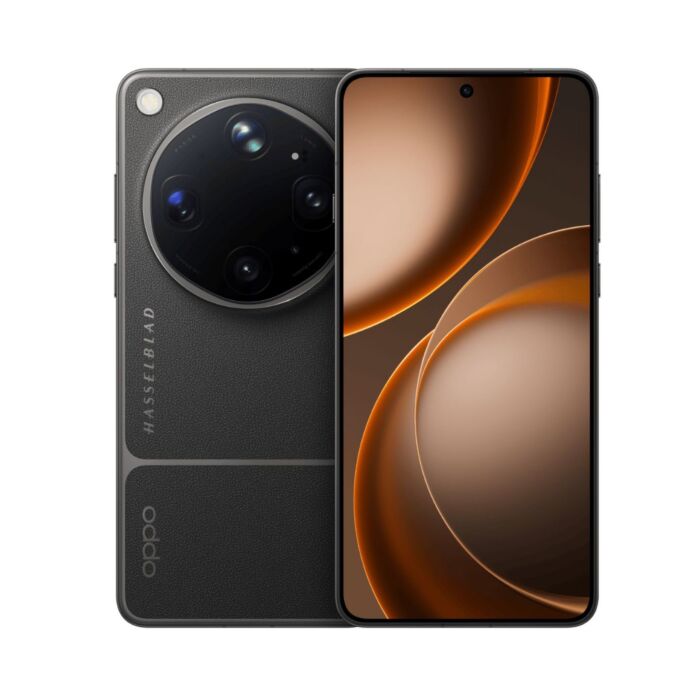
On 21 April 2026, the OPPO Find X9 Ultra landed in Malaysia — the same day as its global debut — with early collection starting from 2 May. Part of the Find X9 series and positioned under OPPO’s brand tagline “Your Next Camera,” the phone sits at the very top of the lineup, priced from RM6,799. At this premium price point, the primary consideration is whether the advanced optical hardware justifies the significant cost difference over the standard Find X9s.
Eight Perspectives. One Masterpiece.
The most significant differentiator for this device is its complex multi-lens camera architecture, which introduces hardware specifications uncommonly found in the current Malaysian market.
The phone carries eight distinct focal lengths running from 0.6x to 20x, all processed through OPPO’s LUMO Image Engine. What that means in practice: a 14mm ultra-wide (50MP, f/2.0, 1/1.95″ sensor), a 23mm main (200MP, f/1.5, 1/1.12″ sensor), a 70mm portrait telephoto (200MP, f/2.2, 1/1.28″ sensor), and a 230mm 10x telephoto (50MP, f/3.5, 1/2.75″ sensor). A dedicated monochrome lens and a True Color Camera rounding out the system with 24 spectral channels and 15EV dynamic range.
The headliner is the Hasselblad 50MP 10x Ultra-Sensing Optical-Zoom Telephoto. OPPO built what it calls a Quintuple Prism Reflection Periscope Structure into this lens — a native 10x optical zoom that extends to 20x optical quality, and up to 120x digital. In practical applications, this 230mm equivalent focal length enables sharp capture of distant architectural details and landscapes, effectively mitigating the softness typically associated with extreme digital zoom. The 1/2.75″ sensor at f/3.5 isn’t the largest in the lineup, but at this focal length — 230mm equivalent — it’s genuinely impressive engineering. Spatial compression at this range means distant mountain contours take on real dimensional weight in the frame.
Then there are the two 200MP cameras. Both the 23mm main and the 70mm portrait telephoto support 200MP multi-frame fusion — meaning the phone stacks multiple exposures to produce images with resolution well beyond what a single-frame JPEG could capture. The main camera’s 1/1.12″ Sony sensor and f/1.5 aperture give it real low-light credentials, drawing in 10% more light compared to the Find X8 Ultra’s main camera according to OPPO’s own lab data. The 70mm telephoto’s 1/1.28″ sensor pulls in 36% more light than the equivalent lens on the X8 Ultra. The increased light intake of these larger sensors directly translates to improved performance in low-light telephoto scenarios, addressing a common limitation in smartphone photography.
For photographers who want manual control, the New-Generation Hasselblad Master Mode supports manual ISO, shutter speed, focus, and white balance, with RAW MAX output. Nine film-style presets are included, and the shooting interface has been fully customised with Hasselblad’s visual language. The Hasselblad XPAN mode recreates the legendary panoramic format and UI, a feature designed to closely replicate the specific user experience of traditional medium-format cameras.
Colour science is handled by the Hasselblad Natural Colour Solution, which runs through a full-link ProXDR pipeline. The intent is to avoid the oversaturated, over-sharpened processing that most smartphone photos carry — instead rendering tones that sit closer to what the scene actually looked like. The True Color Camera continuously adapts to shifting ambient light across all lenses, which matters most in mixed-light environments like Penang’s heritage shophouse interiors or evening hawker stalls.
The Rest of the Spec Sheet, Quickly
A few other things worth knowing:
· Display: 6.82″ QHD+ AMOLED, 3168×1440, up to 144Hz (though 144Hz is reserved for select game scenarios; typical adaptive range is 1-120Hz), 3600nits peak, Dolby Vision
· Chipset: Snapdragon 8 Elite Gen 5 with OPPO Trinity Engine; 20% CPU and 23% GPU improvement over the previous generation per Qualcomm’s data
· Battery: 7050mAh with 100W wired SUPERVOOC and 50W wireless AIRVOOC; silicon-carbon anode technology for higher energy density
· Video: 8K at 30fps, 4K at 120fps, Dolby Vision, ACES-certified colour pipeline, Log recording with real-time LUT preview
· Build: IP66, IP68, IP69-rated; Corning Gorilla Glass Victus 2; Swiss SGS Five-star Certification
· Connectivity: Wi-Fi 7, Bluetooth 6.0, 5G, NetworkBoost Chip S1 for adaptive signal management
How It Compares Within the Find X9 Family
The Find X9s, also launched in Malaysia at RM3,899, is the easier recommendation for most buyers. It brings a triple 50MP camera system (f/1.8 main / f/2.0 ultra-wide / f/2.6 periscope telephoto at 73mm), Dimensity 9500s, a 7025mAh battery with 80W charging, and a lighter 202g body on a 6.59″ FHD+ display. It’s a solid travel camera in a more manageable form.
The gap between the Find X9s and the Find X9 Ultra is not just about megapixels. The Find X9s tops out at 3x optical zoom and FHD+ resolution. The Ultra’s 10x periscope telephoto and dual 200MP sensors represent a fundamentally different level of reach and resolution — one that makes a real difference when photographing subjects at distance, whether that’s wildlife in Taman Negara or architectural geometry shot from across a city square. While the Find X9s offers its own highly capable Hasselblad Master Mode, the Ultra exclusively adds 8K video recording.
For anyone in Malaysia looking to replace a dedicated camera for travel and heritage documentation — not just casual shooting — the OPPO Find X9 Ultra is currently an exceptionally comprehensive mobile imaging system at that price tier locally. The RM2,900 price gap over the Find X9s is steep. Whether that gap makes sense depends entirely on how seriously photography factors into the decision.
Ergonomics and Portability Constraints
The phone weighs 235-236g depending on colour variant. The Tundra Umber finish, with its eco-leather back, comes in at 9.10mm thick — slightly chunkier than the Canyon Orange’s 8.65mm. Neither is a slim phone. Given these dimensions, users prioritizing pocketability may find the lighter, 7.99mm-thick Find X9s more suitable for extended handheld use.
Worth Knowing
The Hasselblad Earth Explorer Kit — which includes a 300mm Explorer Teleconverter, Explorer Case, and Adapter Ring — is sold separately. This teleconverter extends reach to 690mm at optical quality, with f/2.2 aperture and OIS+EIS stabilisation. It’s an optional add-on, but for photographers chasing the best professional mobile camera for landscapes and heritage sites, it turns the OPPO Find X9 Ultra into something closer to a modular imaging system than a standard smartphone.
The Find X9 Ultra runs ColorOS 16 on Android, with OPPO AI features including AI Mind Space, AI Bill Manager, and AI Menu Translation baked in — useful additions for Malaysian users navigating multilingual environments.
Pre-orders closed 7 May 2026. The phone is now available through OPPO Malaysia’s retail and online channels.