Music
Exclusive Coverage: Rachael Sage Opens Up About “Kill The Clock” and Canopy

10 Dec, 25
In every era, certain artists have a knack for turning life’s noise into something meaningful, something melodic, something that makes you pause and breathe for a minute. Music becomes the place you regroup, reset, and remember what actually matters. Whether it is joy, nostalgia, or a little hard earned perspective, the right song can feel like a soft landing in a world that moves too fast.
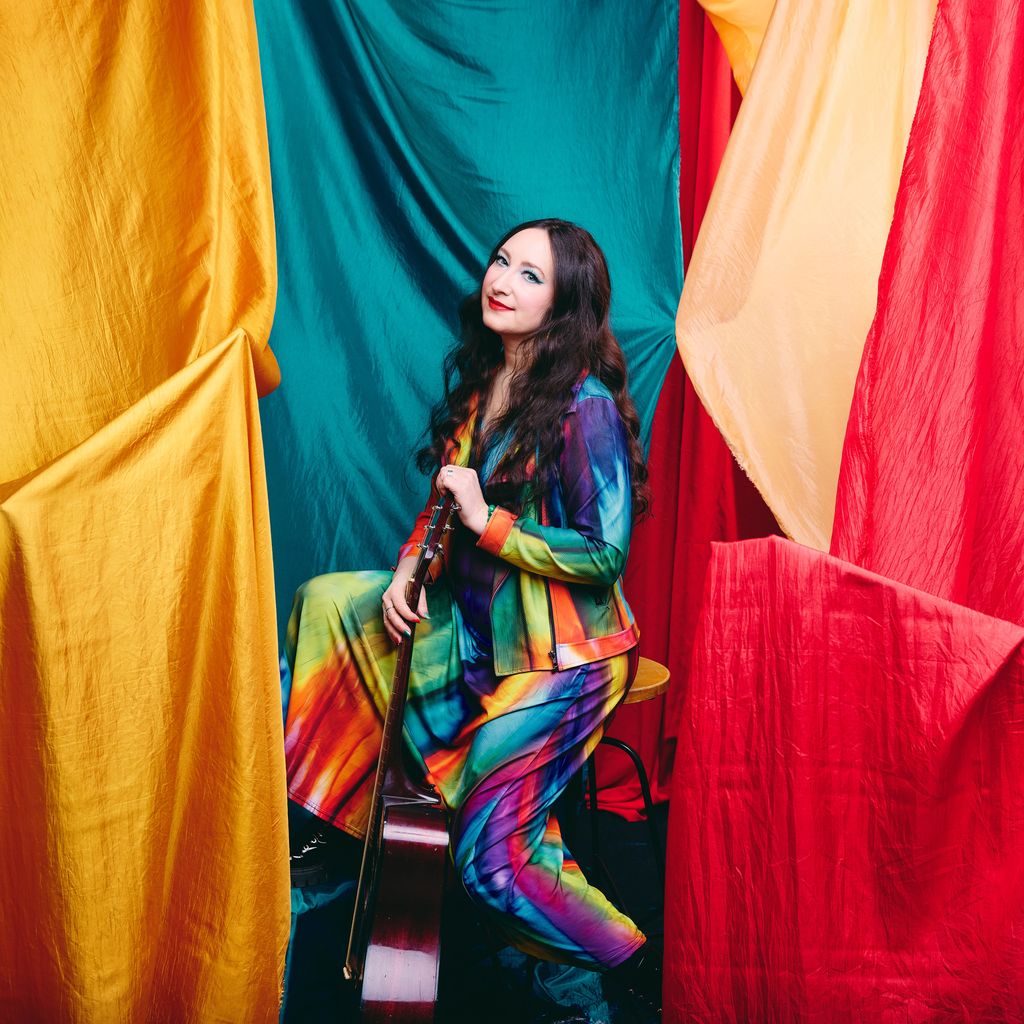
Rachael Sage has been creating that kind of space for years. A wildly creative force with roots in songwriting, visual art, and dance, she has built a career on heartfelt storytelling and imaginative genre blending. With her longtime band The Sequins, she continues to shape songs that feel inviting, thoughtful, and full of color. Their new album, Canopy, pulses with exactly that energy, ranging from bright piano pop to reflective folk, all tied together by Sage’s instinct for connection and clarity.
We chatted with Rachael about the rediscovery of “Kill The Clock,” the new music video, and how Canopy came together as a celebration of creativity, community, and finding your own rhythm.
You’ve been writing songs since you were young. What do you remember most about your earliest years creating music, and how do those early instincts still show up in your work today?
I remember writing instrumental music at the piano as young as 3 and 4 years old. I first started writing faux-classical, as I like to put it – since I had no idea what I was doing – and it was mostly based on me hearing classical music in my toddler-ballet class, which I’d started at 2 & 1/2 because my mom had been a ballet dancer. Shortly thereafter, she took me to my first Broadway show, Oklahoma, and apparently, I came home and played the score by ear (but only with one hand).
I remember the feeling of excitement when it clicked that I could make up my own music and add words and melodies to it, and started really honing that at sleepaway camp at 5 and 6, when I would play little songs on their upright piano and sing them in the talent show, which was every Friday.
One of the most empowering things that could’ve happened to me at such a young age randomly occurred when the camp pianist, Ramona, wasn’t able to be there one week, and the director of Camp Mataponi (Sandy) wisely asked if I could play the camp theme song instead. I’d never done it, but he’d noticed I could play by ear and basically gave me my first gig – ha. I’m sure I must’ve picked the key of C because it was the only one I played in yet…and I muddled through with everyone singing along, and from then on I’d pretty much forged my identity as “the girl who played piano by ear.” Of course, everyone started asking me to play Top 40 hits, Billy Joel etc., so that was a kind of educational challenge, early on. Later on, camp counselors were into stuff like The Police and various bands they’d play on cassette, and that broadened my horizons pretty quickly from my parents’ doo-wop and show tunes! I suppose the key concept from the beginning was latching onto universal lyrics and memorable melodies and using that language to bring people together in some way; that’s still a large part of what I do as an artist.
You come from such a multidimensional creative background — ballet, visual art… Did they impact the way you approach songwriting and storytelling?
I have always thought of creativity and self-expression as a way of walking through life, of being open to the process of connecting the dots of symbolism, metaphor and ultimately the magic that some people call “soul” that makes our daily lives more beautiful and less arduous, ideally. It was a respite for me early on when I first learned that I must be “different”,i.e. an outsiderin some way, because I was relentlessly bullied beginning in second grade all through sixth grade – and I could never quite escape the definition of being “weird” or just altogether nerdy, no matter how I tried. So art, music, dance… those became my best friends from a pretty young age, and I suppose they did, necessarily, impact my sense of storytelling because we don’t create in a vacuum. Our story – who we are, what we’re able to rise above or just make light of even – gets sewn into the fabric of what we create, and whether it’s more cryptic or overt, I love how the creative arts can provide that kind of safety and also transform something mundane into something beautiful that others can enjoy and see themselves in.
As far as ballet, well, there’s no question that learning the language of dance as a young person and eventually performing with an orchestra to Balanchine’s brilliant (and heavily story-driven) choreography was formative and also introduced me to the idea of how vital it is that an ensemble be able to work together, and can be rock solid and supportive of the solist(s) but also wildly expressive. Those experiences taught me invaluable lessons in discipline, but also how preparation provides the best kind of freedom when it comes to live performing.
You said your mom found the original “Kill The Clock” demo in the basement. What was it like revisiting a teenage version of yourself through that recording?
I used to have sort of a love/hate relationship to hearing old demos, because my voice is super pitchy to my ears now, and the arrangements and production are so much more raw. But I will say that when I heard this particular demo, I thought: wow, I was really having fun with how imaginative one could be when self-recording. There were tubular bell sounds like I was representing Big Ben or something, and lots of creative, wild synth sounds coming and going along with some pretty ambitious harmonies. In some ways, I had to simplify the arrangement quite a bit for us to play as a band and let those ideas go, but the kernel of the song – the chords, lyrics and rhythm – is identical. I might share the original demo on my Patreon soon; I feel like young-me deserves to have her demo heard by my strongest supporters, and they’d get a bit of a kick out of hearing how my production process and arrangement sensibility had evolved.
“Kill The Clock” speaks to burnout, pressure, and the ‘rat race’ mentality. Why did that message feel especially urgent to bring back now?
With this new album Canopy being so focused on the themes of inclusivity and safety, I felt it was a really interesting angle to include a song that showed how even at such a young age my mind and spirit was struggling to adapt to the challenging expectations of high achievement not only of others in my immediate circle (ahh, the well-meaning parent) – but also to the culture at at large. I remember being very young and feeling enormous pressure to achieve at a high level academically as well as in terms of “extracurricular activities” (such a strange term); I felt often that I was a baby CEO doing my utmost to balance studying with training and performing and certainly I didn’t have much balance in those early years as far as socializing with friends or just hanging out, so to speak. I don’t judge any of that and have no regrets – but it’s just interesting to look back and be able to recognize how early on issues like low self-esteem or straight up anxiety and depression can spring from pressures we face as young people from peers, parents and media messaging to be perfect, to be “exceptional” or just to win rather than to fail and learn from mistakes.
Needless to say, I don’t miss being a teenager – and I know in many ways the pressures teens feel nowadays via social media are equally if not more intense. But I like to think our larger culture has more room/range for what aspiration looks like and a wider range within the definition of “success and achievement”, than when I was a teenager.
Perhaps the silver-lining of the Covid lockdown was a level of mindfulness and resiliency that emerged – and has persisted in different forms. I also felt that “Kill The Clock” tied in very well with my songs “The Best Version” and “Just Enough” which touch on themes of self-confidence and self-love – at a much more hyperactive tempo!
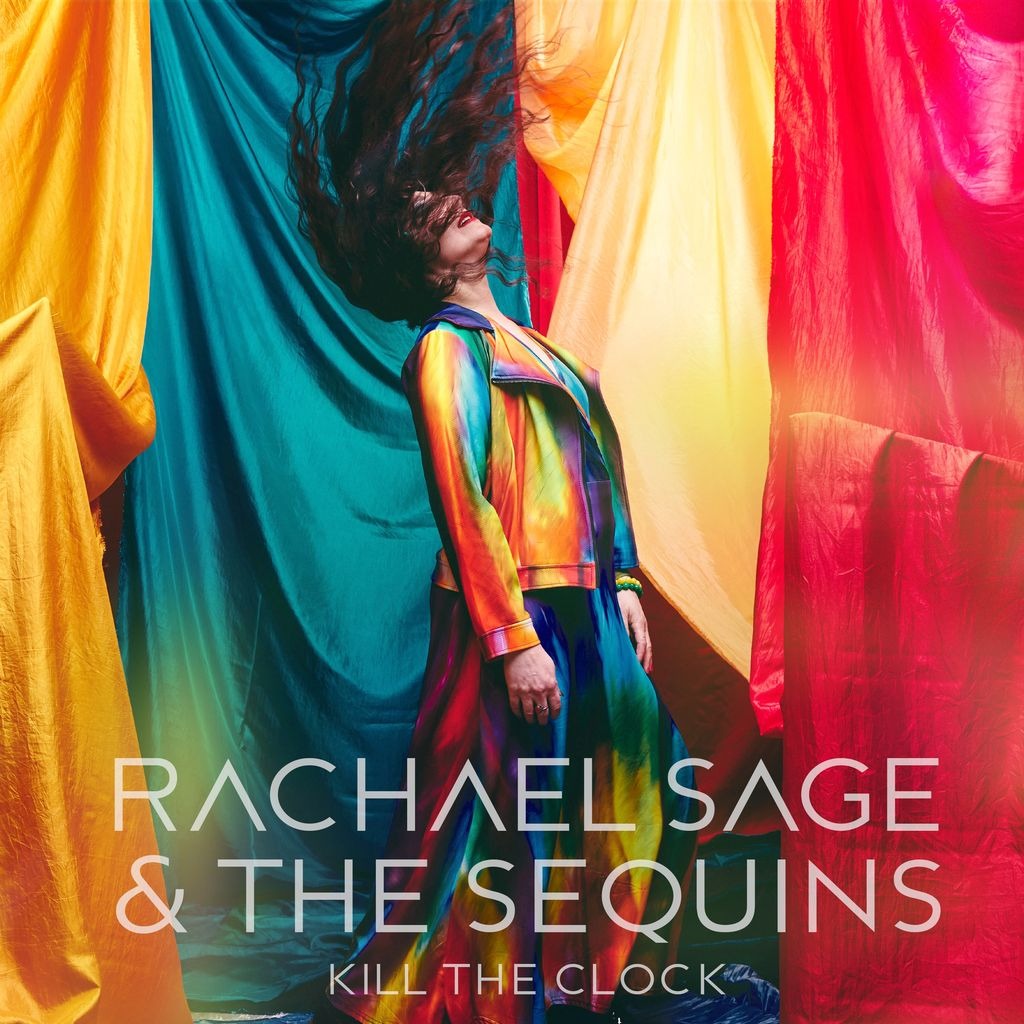
The lyrics were written when you were a teenager… but the meaning still resonates as an adult. What parts of the song hit you harder now?
The lyrics to this song are very psychedelic, and when I wrote them, I was poetically expressing my instinctive rejection of cut-throat competition and status-driven behavior that was all around me. I was still figuring out that you could veil rebellion – however internal – in a pop song.
I think now when I sing the lyrics they just make me feel enormous compassion for that younger version of me who was trying so hard to make sense of all the things everyone else seemed to think were worth proverbially killing yourself for: perfect grades, always winning, wearing the cool brand of whatever, trying to get the popular people to like you even when doing that felt inauthentic, and on and on. There’s a belief that we are who we are as children and I suppose that in a way, Kill The Clock is a reminder to me that I’ve always felt like a bit of an outsider and that I needed to make up my own rules and even my own definition of success, which might be lonely at times but ultimately would be rewarding; sounds like your typical artist! Of course, these lyrics also take on a different meaning now that we’re in the social media era so lines like “good-taste people” could be a Kardashian or a TikTok star. Ultimately, it’s a song about finding substance amidst the noise, aka BS, and whether it’s politics, relationships or even the music business itself, it’s a theme that certainly still resonates.
The music video combines animation from Carissa Johnson with your original paintings. What was the idea behind this approach?
I was introduced to Carissa’s work through our musical friend and musical collaborator Kristen Ford– with whom I toured this past summer – and was simply blown away by her imagination and creativity. I have always wanted to hybrid my artwork with animation, and this seemed like a fun way to finally do that; thankfully, Carissa was very enthusiastic about it, and frankly, I was super impressed by how willing she was to incorporate my artwork. She did it so fluidly, and there’s a lot of humor and surprise in the video, which still strikes me even after repeated viewings. It really feels very “me” but likewise is a beautiful showcase for her wizardry!
You’ve said the song touches on alienation, body imagery, and competitiveness from your ballet years. Was it difficult or cathartic to revisit that era creatively?
It was pure fun and very liberating actually to try to parse what my younger mind was thinking and feeling when I wrote this song, from an older perspective and especially fun to rearrange it with my band The Sequins – especially because when I was younger it was literally my dream to one day have a band that could play live with me and bring the electronic vision to life with real instruments. So it was definitely cathartic! The only really difficult thing was trying to honor how fast-paced my energy and ability to spit out those lyrics was. I slowed it down slightly, but wow, I was in much better aerobic shape then, ha!
Canopy is the first album released under the Rachael Sage & The Sequins moniker. What made now the right moment to spotlight the band as a collective identity?
Well, as mentioned I’ve been releasing music for almost 30 years now and especially given the themes of inclusivity it just felt like the perfect time to give The Sequins their flowers, so to speak. While I’m the writer and front person, there’s no way I could create these specific recordings without these fine players who also happen to be some of the very best human beings I know. I wanted to celebrate that intersection between the live and studio processes we’ve shared and highlight their unique creative voices and talents, within what has essentially evolved into a collective of like-minded, dear musical friends and collaborators!
Canopy leans into themes of inclusivity, safety, and compassion. What personal experiences inspired those messages?
I feel like that’s a bit like asking “what has your life been like up until now” – ha – so to keep it succinct: I have often felt like the outsider in many social situations to the point where it became painful and even hopeless. The more I came to know myself and find my kindred spirits in life and the arts, the less lonely and more uplifted I’ve become. Why wouldn’t I want to share some of that through my music? Now seemed like the best possible time, and I think most people have been struggling in some way to make sense of how little compassion and concern has been reflected lately among our political leadership. Music is a balm, a healer and it’s always been that for me so I’m just paying it forward, so to speak.
Tracks like “Nexus,” “Live It Up,” and “Just Enough” cover such different emotional registers. How do you decide which stories become songs for this record versus paintings, poems, or other creative outlets?
They tend to decide for me actually. If it’s music or poetry still on the cutting room floor, or becomes a painting instead, it’ll be shared when it’s ready or in some other way…
You’ve been on the Under My Canopy Tour and have a special holiday show in NYC. How has performing these new songs live shifted your relationship to them?
Yes – we’re very excited to share this material at our Annual MPress Holiday Bash at Bowery Electric very soon – December 10th! I can’t wait to be able to play with my whole band again as I’ve mainly been touring as a trio the last couple months, which is super fun in another way – but it’ll be amazing to reunite with all The Sequins, and end this year on a grateful, sparkly high with so many other MPress team members and artists I respect and love!
As you look ahead to 2026, what’s next for you?
I’m gearing up to complete an acoustic album over the winter, after my UK tour ends (I’m currently out with The Overtones and writing this from London), and then I’ll be diving into a live recording project I can’t really chat about but it’ll be a fun way to celebrate me releasing musical for 30 years, as of 2026!
We’ll be whipping up some fun anniversary celebration events for next year, but first it’ll be great to be home in New York for a bit, catch up with loved ones and generally decompress as I’ve basically been on tour solidly for the last 8 months!