Music
Natalie Del Carmen’s “Gone For Good” Turns An Indie Classic Into A Dusty Americana Heartbreaker

15 Jun

There’s something quietly devastating about the way Natalie Del Carmen approaches heartbreak. She doesn’t oversell it or dramatize it for effect. Instead, she lets the emotion sit where it naturally belongs: in the spaces between longing and resignation, freedom and grief, memory and acceptance. On her newest release, a reimagined version of The Shins’ “Gone For Good,” Del Carmen transforms the beloved indie classic into something deeply rooted in Americana storytelling, wrapping James Mercer’s iconic songwriting in pedal steel, smoky guitar tones, and the kind of honesty that lingers long after the song ends.
Originally released by The Shins in 2003, “Gone For Good” has remained one of indie music’s most enduring breakup anthems, defined by its restless ache and understated vulnerability. Del Carmen doesn’t attempt to outdo the original or reinvent it beyond recognition. Instead, she expands its emotional world, filtering it through a darker country-western lens that feels both timeless and intensely personal. The result is less of a cover and more of a conversation across generations, one where Del Carmen steps into the song’s landscape and uncovers new textures hiding beneath the surface.
Produced by David Dorn and Alex Torrez, the track trades the original’s loose indie rock warmth for sweeping pedal steel, dusky electric guitar swells, and rich piano arrangements that feel cinematic without losing their intimacy. Every instrument seems to drift alongside Del Carmen’s voice rather than overpower it, allowing the emotional exhaustion at the center of the song to fully breathe. Her vocal performance is restrained but deeply affecting, carrying the weight of someone trying to convince themselves they’re ready to walk away while still mourning what they hoped the relationship could become.
What makes Del Carmen’s rendition so compelling is how naturally she inhabits the song. Though she was born just two years before its original release, “Gone For Good” clearly exists as part of her DNA. “If it comes on in the car, nobody’s skipping,” she explains. “Millennials and Gen Z’ers become the same person for a moment.” That observation perfectly captures why the song still resonates more than two decades later. It’s not simply about heartbreak; it’s about emotional drift, about recognizing when love has become unsustainable even if part of you desperately wishes otherwise. Del Carmen leans heavily into that tension. There’s no bitterness in her delivery, only exhaustion and clarity slowly settling in together. Her interpretation reframes the song through what she calls a “Gen Z western female perspective,” grounding Mercer’s lyrics in dusty Americana textures and a more lived-in realism. The pedal steel aches like memory itself, while the darker electric guitar hits create moments of unease that mirror the song’s internal conflict. It’s restless, lonely, and strangely comforting all at once.
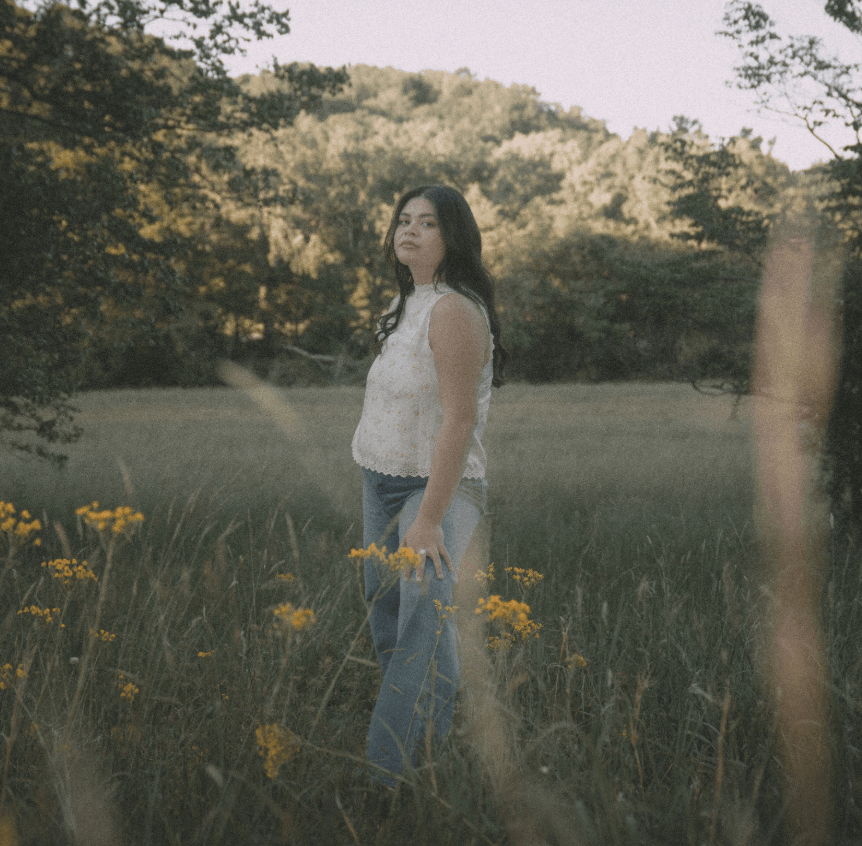
That balance between classic songwriting and youthful perspective has become central to Natalie Del Carmen’s artistry. Raised in Los Angeles and shaped by the city’s cultural diversity, Del Carmen has steadily emerged as one of the most exciting voices within modern Americana. A graduate of Berklee College of Music, she first gained recognition through her 2023 debut album Bloodline, which blended roots music traditions with sharp storytelling and maturity far beyond her years. Her sophomore album, Pastures, expanded that vision even further, earning praise from outlets like The Bluegrass Situation, Holler, Atwood Magazine, and Country Central while landing placements on SiriusXM Outlaw Country and Spotify’s Emerging Americana playlists.
What separates Del Carmen from many of her contemporaries is her ability to bridge worlds that don’t always naturally intersect. Her music carries the intimacy of indie songwriting while remaining deeply tied to Americana’s storytelling traditions. On “Gone For Good,” those instincts align perfectly. The track honors the melancholy restraint that made The Shins’ version so beloved while introducing a warmth and grit that feels unmistakably her own. It’s nostalgic without becoming precious, reverent without losing individuality.
There’s also something refreshing about Del Carmen choosing a song like this at this stage in her career. Rather than chasing a viral reinvention or dramatically modernizing the original, she trusts the songwriting enough to let subtle reinterpretation do the work. That confidence speaks volumes about her artistic identity. She understands that heartbreak songs don’t need explosive catharsis to leave an impact. Sometimes the quiet realization that something is ending hurts more than the ending itself.

“Gone For Good” ultimately feels like a natural continuation of the emotional world Del Carmen built on Pastures. It carries the same sense of wandering uncertainty, the same fascination with memory, loss, and survival. But it also marks a subtle evolution, pushing her further into a darker, country-western sonic palette that suits her voice beautifully. Every detail is intentional, from the spacious production to the restraint in her performance, allowing the song’s weight to unfold gradually rather than all at once.
In an era where many artists feel pressured to turn heartbreak into spectacle, Natalie Del Carmen chooses something far more difficult: honesty. Her version of “Gone For Good” doesn’t offer closure or dramatic resolution. Instead, it lingers in the complicated aftermath where most real heartbreak actually exists. And in doing so, she transforms an indie classic into something truly timeless.
“Gone For Good” is available now on all streaming platforms via Torrez Music Group. Follow Natalie Del Carmen on Instagram and TikTok and visit NatalieDelCarmen.com for upcoming tour dates, new music, and future releases.